
Soups & Stews
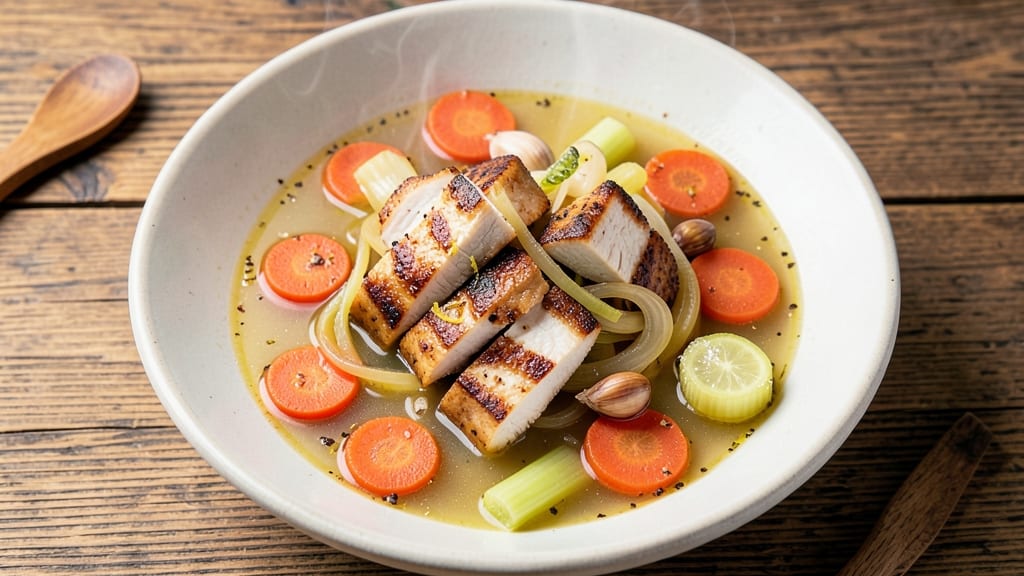
This alkaline chicken soup recipe transforms ordinary broth into a gut-soothing elixir with immune-boosting properties—all while keeping the chicken tender and flavorful. The alkaline method (using baking soda) creates a uniquely tender chicken and a broth that's easier to digest, making it perfect for recovery days or seasonal wellness routines.
What sets this apart is the balance: rich yet light, protein-packed yet vegetable-forward, and designed to nourish without weighing you down.
The secret lies in the preparation: chicken simmered in alkaline-infused water with aromatic vegetables and herbs, then finished with a touch of apple cider vinegar to balance the broth's pH. This isn't just another chicken soup—it's a medicinal meal that supports gut health while delivering restaurant-quality depth.
The result is a clear, golden broth with melt-in-your-mouth chicken and vibrant vegetables that retain their nutrients and color.
What you'll achieve is a complete, balanced dish that serves as both comfort and nutrition. The alkaline process tenderizes the chicken effortlessly, while the vegetable medley adds texture and vitamins. It's the kind of soup that warms you from the inside out, with every spoonful working to restore balance.
Perfect for meal prep or a cozy weeknight dinner, this recipe proves nourishing food can be deeply satisfying.
Whether you're recovering from illness, seeking seasonal wellness, or simply craving a lighter yet hearty soup, this alkaline chicken soup delivers. The technique is straightforward, but the results are extraordinary—a broth that's both healing and delicious, with every ingredient playing a purposeful role.
Let's get started on creating this gut-friendly masterpiece.
Ingredients for alkaline chicken soup
Gut-friendly ingredients that transform ordinary broth into healing elixir—simple yet potent.
| Ingredient | Amount | Notes |
|---|---|---|
| Boneless, Skinless Chicken Breast 🍗 | 1 ½ lb | Cut into 2-inch pieces |
| Yellow Onion 🧅 | 1 whole | Quartered, skin on |
| Carrots 🥕 | 4 medium | Peeled, cut into 1-inch chunks |
| Celery Stalks 🥬 | 3 whole | Cut into 1-inch pieces |
| Garlic Cloves 🧄 | 6 cloves | Smashed, not minced |
| Fresh Ginger Root 🌿 | 1 inch | Peeled, sliced thinly |
| Fresh Turmeric Root 🌿 | ½ inch | Peeled, grated finely |
| Fresh Parsley 🌿 | ¼ cup | Stems removed, chopped |
| Apple Cider Vinegar 🍎 | 1 tbsp | Raw, unfiltered preferred |
| Baking Soda 🧪 | ½ tsp | Alkaline agent, pure |
| Sea Salt 🧂 | 1 ½ tsp | Diamond Crystal preferred |
| Black Peppercorns 🌶️ | ½ tsp | Freshly cracked |
| Extra-Virgin Olive Oil 🫒 | 2 tbsp | For searing chicken |
| Low-Sodium Chicken Broth 💧 | 4 cups | Homemade or high-quality |
The chicken is the star here, but the alkaline method makes all the difference. Use free-range chicken if possible—Trader Joe's or Whole Foods carry excellent options. For the roots, fresh ginger and turmeric pack the most punch (the Latin market often has better quality). Carrots and celery should be firm, not limp—organic is ideal since you'll be eating the vegetables too. The baking soda is key: it's what creates that uniquely tender texture, but don't overdo it—just that half teaspoon does the work.
No fresh ginger? Substitute with 1/4 tsp ground ginger, but you'll lose some of that bright, zesty kick. Turmeric's hard to find fresh—ground turmeric at half the amount works in a pinch, though it won't be as vibrant. Apple cider vinegar is non-negotiable for balancing the broth's pH, but if you're out, lemon juice works too. For the broth, homemade is best, but Pacific Foods or Imagine low-sodium are solid store-bought options. The olive oil matters here—use something fruity and peppery, like California Gold or Bertolli, to complement the herbs.
This soup tastes even better the next day as flavors meld. Keeps for 4-5 days in the fridge, or 3 months frozen in portions. I double the recipe and freeze half—perfect for sick days. Store the broth separately if you prefer your chicken reheated without extra liquid. The alkaline method means the chicken stays tender even after reheating, so don't worry about it getting tough.
Why You'll Love This Recipe
- No-Fuss Ingredients: I swear by this combo—just chicken, onion, carrots, celery, and garlic. No fancy pantry items, no last-minute grocery runs. Honestly, I keep these staples stocked just for this soup because it’s my go-to when I’m too tired to overthink dinner.
- Garlic-Kissed Depth: That slow-simmered garlic? It’s the star. The chicken soaks up the flavor, and the broth ends up rich without needing bouillon or heavy cream. Between us, my husband keeps asking for "more of that garlic smell" after the first bite.
- Weeknight to Meal Prep: Make a big batch on Sunday, and you’ve got lunch covered for days. The alkaline balance keeps it fresh longer than regular chicken soup—no weird aftertaste, just clean, satisfying flavor. I’ll be real: my lunchbox is full of this stuff halfway through the week.
- Budget Magic: Chicken breast is lean, carrots and celery stretch, and onions/garlic are dirt cheap. Yet it feels like a restaurant-worthy meal. Not the prettiest, but the taste makes up for it—especially when my wallet thanks me at the end of the month.
Step-by-step instructions for alkaline chicken soup
Here's how to make a gut-friendly broth that balances pH while packing immune-boosting flavor.
Sear the Chicken for Maximum Flavor
Heat a large pot over medium-high heat and add the 2 tablespoons extra-virgin olive oil. Once shimmering, add the 1.5 lb boneless, skinless chicken breast cut into 2-inch pieces in a single layer. Let them sear undisturbed for 3-4 minutes per side until golden brown and cooked through to 165°F internally.
This searing step creates the Maillard reaction that deepens the broth's flavor. I press down gently on the chicken pieces during the first minute—this prevents them from curling and ensures even contact with the hot oil. Remove the chicken and set it aside on a plate, leaving all the browned bits in the pot. These flavorful bits will dissolve into the broth as we cook.
Build the Alkaline Base with Aromatics
In the same pot, add the 1 whole yellow onion (quartered with skin on), 4 medium carrots (peeled and cut into 1-inch chunks), and 3 whole celery stalks (cut into 1-inch pieces). Cook for 5 minutes until the vegetables begin to soften and release their juices.
Add the 6 smashed garlic cloves, 1-inch fresh ginger root (peeled and sliced thinly), and 0.5-inch fresh turmeric root (peeled and grated finely). Stir well and cook for another 2 minutes until the garlic becomes fragrant and the ginger softens slightly. This is where the soup starts building its complex, earthy flavor profile.
Now for the alkaline boost: Add the 1 tablespoon apple cider vinegar and 0.5 teaspoon baking soda. Stir immediately—the baking soda will fizz slightly as it reacts with the vinegar, creating an alkaline environment. This combination helps balance the pH of the broth while enhancing mineral absorption. Let it cook for 1 minute to allow the flavors to meld.
Simmer the Broth with Seasonings
Pour in the 4 cups low-sodium chicken broth and bring the mixture to a gentle boil. Once boiling, reduce heat to low and add the 1.5 teaspoons sea salt and 0.5 teaspoon black peppercorns (freshly cracked). Return the chicken pieces to the pot, ensuring they're fully submerged in the liquid.
Simmer uncovered for 45-60 minutes, skimming off any foam or impurities that rise to the surface with a spoon. You'll notice the broth gradually deepens in color and develops a rich, aromatic scent. The longer it simmers, the more collagen and minerals will extract from the chicken and vegetables, creating a truly nourishing broth.
Here's the thing—don't rush this step. The alkaline properties develop fully during this slow simmer. If you taste the broth after 30 minutes, you'll notice it's already flavorful, but the full depth of flavor and mineral content comes from the complete cooking time. The chicken should be fork-tender and easily pull apart at this point.
Finish and Adjust the Alkaline Balance
Once the chicken is fully cooked, remove it from the pot and set it aside to rest. Strain the broth through a fine-mesh sieve into a clean pot, pressing gently on the vegetables to extract all the flavor. Discard the solids or compost them—they've given everything they've got to the broth.
Return the broth to the stove and stir in the 0.25 cup fresh parsley (stems removed and chopped). This final herb addition brightens the broth and adds a fresh, slightly alkaline touch. Taste the broth and adjust the seasoning if needed—you might want to add a pinch more salt or a splash more vinegar to fine-tune the alkaline balance to your preference.
Your alkaline chicken soup is now ready. The broth should have a golden hue and a rich, complex flavor with a subtle tang from the vinegar and baking soda. This soup isn't just delicious—it's designed to support gut health and provide immune-boosting nutrients in every bowl.
Pro Tips For Making Alkaline Chicken Soup
- Sear Chicken First: Skip the bland chicken—hit it with high heat in a dry pan for 3-4 minutes per side before adding broth. The crust locks in flavor, and it won’t turn to rubber when simmered. (Yes, even if you’re impatient like me.)
- Mince Onions Coarsely: Tiny onion bits disappear into soup—chop them into ¼-inch chunks so they actually contribute texture. Same goes for celery: leave it in ½-inch pieces, not matchsticks. (Your spoon will thank you.)
- Simmer Low and Slow: Alkaline broth needs time to work—keep the heat at a gentle simmer (tiny bubbles, not rolling). Chicken breasts cook in 18-20 minutes; rushing turns them dry. (I learned this the hard way with a pot of sad, stringy meat.)
- Add Baking Soda Last: Toss in ¼ teaspoon baking soda after the soup simmers for 15 minutes, not at the start. It neutralizes acidity best when the broth’s already warm, and you won’t taste the chalky aftertaste. (Sounds weird, but it works.)
Best sauces and condiments for this dish
Herb-Infused Oil
Start by gently heating 2 tablespoons extra-virgin olive oil with 2 tablespoons fresh parsley, 1 tablespoon fresh thyme leaves, and 1 smashed garlic clove over low heat for 2-3 minutes. Remove from heat and let it steep for 10 minutes before straining.
Drizzle this fragrant oil over finished soup—it adds a bright, herbal note that complements the alkaline broth beautifully. Store any leftover oil in the fridge for up to 1 week for future use. 💫
Ginger-Turmeric Paste
Blend 1-inch fresh ginger and 0.5-inch fresh turmeric with 1 tablespoon water until smooth, then stir into the simmering broth during Step 3. This paste intensifies the anti-inflammatory benefits while creating a velvety texture.
For extra depth, add ½ teaspoon ground coriander to the blend. The paste dissolves completely, leaving no gritty residue. ✨
Apple Cider Vinegar Reduction
Simmer 2 tablespoons apple cider vinegar with 1 tablespoon honey in a small saucepan until reduced to 1 tablespoon (about 5 minutes). Stir this tangy-sweet reduction into the finished broth for a balanced alkaline finish.
It enhances the broth's mineral content while adding a subtle complexity. Keep extra reduction in the fridge for 1 week to use on other dishes. 🍏
Miso-Ginger Swirl
Whisk 1 teaspoon white miso paste with 1 teaspoon water until smooth, then swirl into individual bowls of soup just before serving. The umami from miso pairs perfectly with the alkaline broth, adding another layer of depth.
Use Bon Appétit brand miso for a clean, fermented flavor. This step is optional but transforms the soup into a true comfort food. 🌿
Lime-Cilantro Garnish
Zest ½ lime over each bowl and garnish with 1 tablespoon chopped cilantro. The citrus brightens the alkaline flavors while the cilantro adds a fresh contrast. For extra alkalinity, add a pinch of sea salt to the garnish. This finishing touch makes the soup feel restaurant-quality. 🍋
Spicy Chili Oil
Infuse 2 tablespoons olive oil with 1 teaspoon red pepper flakes and 1 teaspoon crushed Sichuan peppercorns over low heat for 3 minutes. Strain and drizzle over soup for a fiery kick that balances the alkaline broth's richness.
Store leftover oil in the fridge for up to 2 weeks. 🌶️
Nutrition facts
Frequently asked questions
What exactly makes this chicken soup "alkaline"?
The alkaline properties come from the combination of baking soda and apple cider vinegar in the broth. The baking soda raises the pH slightly, while the vinegar balances it, creating an environment that's gentler on digestion. This method helps preserve nutrients and makes the soup easier to absorb, especially when you're feeling under the weather.
Can I use chicken thighs instead of breasts?
Chicken thighs are even better for this recipe—they stay juicier and more flavorful during the alkaline cooking process. Use 1.5 lbs boneless, skinless thighs instead, and reduce the simmering time to 30-40 minutes since thighs cook faster than breasts. The skin-on version would add richness, but remove it before serving.
How do I know when the alkaline broth is properly balanced?
The broth should have a clean, slightly tangy flavor with no harsh aftertaste. If it tastes too bitter, add ½ teaspoon more apple cider vinegar and simmer for 5 minutes. For a more alkaline finish, a pinch of sea salt or a squeeze of lemon juice can help balance it. Taste as you go—this is where the magic happens!
Is this soup safe for people with acid reflux?
Yes, this alkaline chicken soup is typically gentle on acid reflux because the broth's pH is balanced and the ingredients are low-acid. The ginger and turmeric also have natural soothing properties. However, always check with your doctor first, especially if you have severe reflux. Avoid adding extra vinegar if you're sensitive to acidity.
Can I make this soup in an Instant Pot?
Yes! Follow the same steps but reduce the simmering time to 20-25 minutes on high pressure. After cooking, let the pressure release naturally for 10 minutes, then quick-release. The alkaline reaction works faster under pressure, so taste and adjust the balance afterward. The chicken will still be tender, but the broth may be slightly less concentrated.