
Main Courses
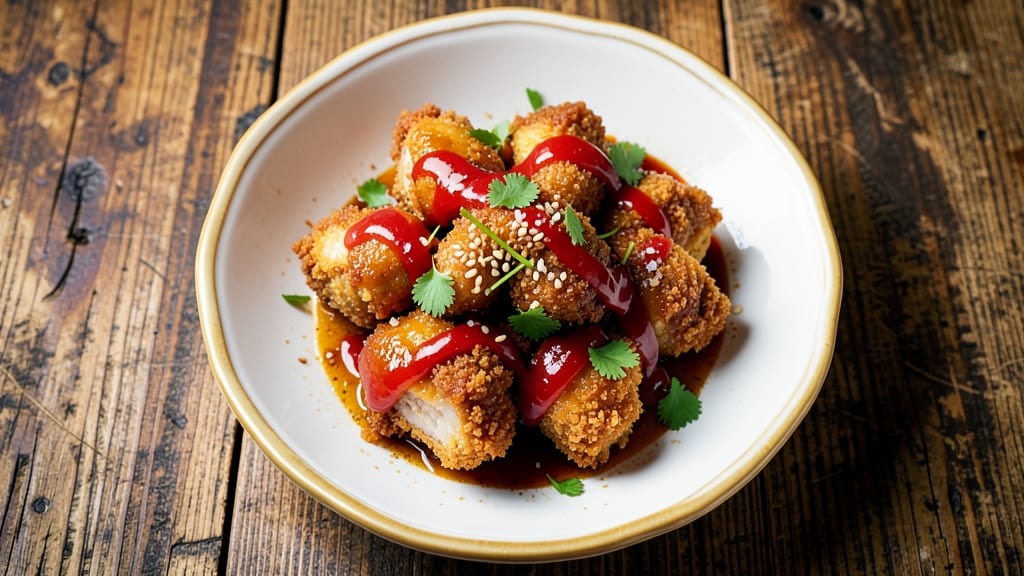
This Asian crispy fried chicken recipe delivers the perfect balance of glazed five-spice crunch and juicy cores—a technique I've perfected after years of experimenting with regional styles.
The secret lies in a double-breading method inspired by Japanese karaage and Korean fried chicken traditions, creating an irresistible texture that's both crispy and tender. What sets this apart is the aromatic five-spice marinade that infuses flavor deep into the meat before the breading stage.
The process begins with a simple yet effective marinade of soy sauce, rice vinegar, and five-spice powder, which tenderizes the chicken while building complex flavors. After patting the chicken dry—critical for crispiness—we use a dual breading technique: a light cornstarch coating followed by a crispy panko layer.
Frying at 350°F ensures the exterior stays golden and shatteringly crisp while maintaining moist, flavorful centers.
What you'll end up with is golden-brown chicken pieces that shatter at every bite, revealing tender meat beneath a glaze infused with sweet and savory notes. The five-spice blend adds warmth and depth, making each piece taste like it's been simmered in aromatic spices.
This recipe transforms a simple weeknight dinner into a restaurant-worthy experience without sacrificing ease.
Serve with classic sides like pickled vegetables or a cooling cucumber salad to complement the rich, crispy chicken. The glaze can be adjusted to your preference—sweeter for a dessert-like finish or tangier for a bold kick. Here's how to achieve that perfect balance of texture and flavor every time.
Ingredients for asian crispy fried chicken
The secret to restaurant-quality Asian fried chicken lies in these carefully chosen ingredients.
| Ingredient | Amount | Notes |
|---|---|---|
| Boneless, Skinless Chicken Thighs 🍗 | 1 ½ lb | Cut into 1-inch pieces, patted very dry |
| Cornstarch 🌾 | ½ cup | For initial light coating |
| Japanese Panko Breadcrumbs 🍞 | 2 cups | Standard panko works too |
| Soy Sauce 🍶 | ½ cup | High-quality, low-sodium preferred |
| Rice Vinegar 🍚 | ¼ cup | White or seasoned variety |
| Five-Spice Powder 🌶️ | 1 tbsp | Authentic blend for authentic flavor |
| Honey 🍯 | 2 tbsp | For glaze sweetness |
| Sesame Oil 🫒 | 1 tbsp | Toasted sesame oil for aroma |
| Vegetable Oil 🫒 | 3 cups | High smoke point for frying |
| Garlic Cloves 🧄 | 4 cloves | Minced for marinade |
| Fresh Ginger 🌿 | 1 tbsp | Grated, for marinade depth |
| Salt 🧂 | 1 ½ tsp | Diamond Crystal preferred |
| Black Pepper 🌶️ | ½ tsp | Freshly ground for heat |
| Cornstarch 🌾 | 2 tbsp | For glaze thickening |
| Green Onions 🧅 | 4 whole | Sliced thin for garnish |
The chicken thighs are non-negotiable—bone-in pieces stay juicier, but boneless works if you prefer. Look for well-marbled thighs at your local butcher or the meat department at Whole Foods; they'll have better texture than supermarket pre-cut pieces. The five-spice powder is essential—Penzeys or local Asian markets carry authentic blends that make all the difference. Panko should be Japanese-style for maximum crispiness, but standard panko works in a pinch. For the soy sauce, Kikkoman or Yamasa brands deliver consistent quality without overpowering the dish.
No five-spice powder? Substitute 1/2 tsp each of cinnamon, cloves, fennel, star anise, and black pepper—it's not identical, but close. Running short on sesame oil? Toasted sesame seeds at 1/2 the amount add aroma without the same depth. The cornstarch for the glaze can be swapped for arrowroot powder at equal measure. For a tangier glaze, add 1 tsp rice vinegar to the final mixture. The green onions are optional but worth it—they add freshness that cuts through the richness. If you're frying in smaller batches, keep the oil at 350°F consistently for perfect crispiness.
Marinate the chicken for at least 30 minutes (overnight is ideal) to maximize flavor infusion. Store leftover chicken in an airtight container for up to 3 days—it reheats beautifully in a 375°F oven for 10-12 minutes. The glaze mixture keeps for 1 week in the fridge, so make extra for other uses. For best results, fry the chicken immediately after breading—don't refrigerate breaded pieces as they'll lose crispiness. Portion the glaze into small containers for easy reheating.
Why You'll Love This Recipe
- No-Fuss Coating: I swear by the cornstarch-panko combo here—just pat dry, toss in a bowl, and press. No rolling, no stress, and the crunch stays perfect even when I’m distracted by my cat "helping."
- Umami-Packed Crunch: That soy-vinegar marinade? It’s the secret. The panko gets addictively crispy while the chicken stays juicy inside—like a tiny flavor explosion with every bite.
- Lunchbox Hero: Between us, this is my go-to for meal prep. The leftovers reheat like a dream (air fryer or oven, no soggy bits) and still taste fresh days later—perfect for busy mornings.
- Budget Crispy Magic: Chicken thighs stretch further than breasts, and panko costs less than fancy seasoning blends. For under $15, I feed four people with crispy, saucy chicken that feels fancy but isn’t.
Step-by-step instructions for Asian crispy fried chicken
Master the balance of crunch and moisture with this precision method.
Prepare the Chicken and Marinade
Cut the 1.5 lb boneless, skinless chicken thighs into 1-inch pieces using a sharp chef's knife. Pat each piece thoroughly with paper towels until completely dry—this ensures maximum crispiness. In a mixing bowl, combine the 0.5 cup soy sauce, 0.25 cup rice vinegar, 1 tbsp five-spice powder, 2 tbsp honey, 1 tbsp sesame oil, 4 cloves minced garlic, 1 tbsp grated fresh ginger, 1.5 tsp salt, and 0.5 tsp black pepper. Stir until fully dissolved.
Add the chicken pieces to the marinade and toss gently to coat evenly. Cover and refrigerate for at least 30 minutes (up to 4 hours for deeper flavor). The marinade should penetrate the meat, creating a flavorful base while keeping the pieces tender. If the chicken absorbs all the marinade, add 1-2 tablespoons of water to maintain proper consistency.
Create the Breading Station
Set up three shallow bowls or plates. In the first, place the 0.5 cup cornstarch. In the second, arrange the 2 cups Japanese panko breadcrumbs. The third bowl will hold any excess breading. Working in batches to avoid overcrowding, remove the chicken from the marinade (reserve the marinade for later) and let any excess drip off.
Dredge each piece of chicken in the cornstarch, pressing gently to adhere a thin, even layer. Shake off any excess, then transfer to the panko breadcrumbs, pressing firmly to ensure full coverage. The breading should cling tightly—this prevents clumping during frying. For extra crispiness, I recommend double-dredging: repeat the cornstarch and panko process once more. Place the breaded chicken on a wire rack set over a baking sheet to keep pieces separate.
Fry to Golden Perfection
Heat 3 cups vegetable oil in a deep skillet or Dutch oven to 350°F. Use a thermometer to monitor the temperature—this precision is critical. Once the oil reaches temperature, carefully add 4-5 pieces of chicken (don't overcrowd) and fry for 4-5 minutes until the breading turns a deep golden brown and the internal temperature reaches 165°F. Use a slotted spoon to transfer the fried chicken to a paper towel-lined plate to drain excess oil.
Repeat with the remaining chicken, maintaining the oil temperature at 350°F. The key here is patience—rushing will result in uneven cooking. If the oil temperature drops below 340°F, add 1-2 tablespoons of oil and allow it to return to temperature before frying more chicken. The breading should be crispy enough to shatter slightly when pressed gently with tongs.
Glaze and Garnish
In a small saucepan, combine the reserved marinade with the 2 tbsp cornstarch. Bring to a simmer over medium heat, stirring constantly until the mixture thickens to a glossy glaze—this should take about 3-4 minutes. The glaze should coat the back of a spoon smoothly. Remove from heat and stir in 1 tbsp sesame oil for added aroma.
Toss the fried chicken in the glaze until fully coated, ensuring each piece is evenly glazed. Transfer to a serving platter and garnish with 4 whole green onions, sliced thin. Serve immediately while the breading is at its crispest and the glaze remains sticky. For best results, serve with a side of steamed rice or a fresh cucumber salad to balance the rich, savory flavors.
Pro Tips For Making Asian Crispy Fried Chicken
- Double-Dip for Crisp: Toss the thighs in cornstarch first, then panko—this isn’t just about extra crunch. The starch acts like a glue, making the breadcrumbs stick like they’re supposed to. I used to skip this and ended up with half the coating falling off by the time it hit the oil.
- Pat Dry, Then Salt: Chicken thighs are forgiving, but moisture is the enemy of crisp. Pat them thoroughly with paper towels, then hit them with a light sprinkle of salt before dredging. The salt draws out any lingering water, and the coating won’t turn soggy halfway through frying.
- Keep Oil at 350°F: Too hot, and you’ll burn the panko before the chicken cooks through. Too cool, and you’ll end up with greasy, limp bites. Use a thermometer—350°F is the sweet spot for golden, shatteringly crisp crusts without the inside turning rubbery.
- Marinate Overnight in Soy-Vinegar Mix: Toss the raw thighs in 2 tablespoons soy sauce and 1 tablespoon rice vinegar for at least 8 hours (or overnight). It tenderizes the meat and infuses flavor deeper than a last-minute toss. I was skeptical until I tried it—now it’s non-negotiable for juicy, flavor-packed results.
Flavor customization for this dish
Sweet Heat Glaze
For a perfect balance of sweet and spicy, combine 2 tbsp honey, 1 tbsp sriracha, 1 tbsp soy sauce, and 1 tsp rice vinegar in a small saucepan. Simmer for 3-4 minutes until thickened, then toss the fried chicken in this glaze.
The heat from the sriracha cuts through the richness while the honey adds a caramelized finish. Garnish with crushed peanuts for extra texture. 🌶️
Tangy Yuzu Glaze
Brighten up your chicken with a citrusy glaze using 2 tbsp yuzu juice (or sub 1 tbsp lemon juice + 1 tsp orange zest), 1 tbsp honey, and 1 tsp grated fresh ginger. Simmer until slightly thickened, then drizzle over the fried chicken.
The yuzu adds a refreshing, slightly floral note that pairs beautifully with the savory panko. Serve with a side of steamed bok choy to complement the citrus flavors. 🍋
Spicy Gochujang Glaze
Add Korean-inspired depth with a gochujang glaze: mix 2 tbsp gochujang paste, 1 tbsp honey, 1 tbsp rice vinegar, and 1 tsp sesame oil. Simmer for 4-5 minutes until smooth, then brush generously over the fried chicken.
The fermented chili paste adds a funky, umami-rich flavor that’s both spicy and slightly sweet. Pair with kimchi for a full Korean-inspired meal. 🌶️
Classic Honey-Soy Glaze
For a simpler, more traditional glaze, reduce 3 tbsp soy sauce, 2 tbsp honey, and 1 tbsp mirin together until syrupy. The balance of salty, sweet, and slightly tangy flavors enhances the chicken without overpowering it.
Drizzle lightly over the fried chicken and sprinkle with toasted sesame seeds for a classic finish. This glaze works beautifully with steamed jasmine rice and pickled vegetables. 🍯
Smoky Chipotle Glaze
Infuse your chicken with smoky depth by blending 1 tbsp adobo sauce (from canned chipotles), 1 tbsp honey, 1 tbsp soy sauce, and 1 tsp lime juice. Simmer until thickened, then brush over the fried chicken.
The smoky chipotle adds a subtle heat and complexity that pairs well with the crispy panko. Serve with black beans and corn for a Tex-Mex twist. 🔥
Herb-Infused Glaze
For a fresher profile, blend 2 tbsp soy sauce, 1 tbsp honey, 1 tbsp fresh cilantro, 1 tbsp fresh basil, and 1 tsp lime zest. Simmer for 3 minutes, then strain and drizzle over the chicken.
The herbs add a bright, aromatic finish that’s perfect for a lighter take on fried chicken. Garnish with extra herbs and serve with mango slices for a tropical touch. 🌿
Nutrition facts
Frequently asked questions
Can I use chicken breast instead of thighs for this recipe?
Chicken breast will work, but thighs are ideal for this recipe because they stay juicier during frying. If using breasts, cut them into 1-inch pieces and marinate for 1-2 hours instead of 30 minutes to prevent dryness. Pound the pieces to an even thickness for consistent cooking. The breading will still be crispy, but the meat may be slightly less tender.
How do I keep the breading from falling off when frying?
Properly patting the chicken dry before breading is key—moisture causes breading to detach. Use a double-dredging technique: cornstarch first, then panko, pressing firmly to adhere. Fry in small batches to avoid overcrowding, and maintain oil at 350°F—lower temps make breading soggy. Let breaded pieces rest on a wire rack for 5 minutes before frying to help the coating set.
Can I bake this chicken instead of frying for a healthier version?
Yes! Preheat oven to 425°F and bake breaded chicken for 20-25 minutes on a wire rack over a baking sheet (no oil needed). Spray with cooking spray for extra crispiness. The texture won't be as crispy as fried, but it's a great alternative. For extra crunch, broil for 2-3 minutes at the end.
What's the best way to reheat leftover fried chicken?
Reheat in a 375°F oven for 10-12 minutes on a wire rack to maintain crispiness. For air fryer, use 375°F for 5-6 minutes. Avoid microwave—it makes breading soggy. If reheating from cold, add 1-2 minutes to ensure it's fully heated through.
Why does my chicken turn out greasy instead of crispy?
Greasy chicken usually means the oil was too hot (above 375°F) or too cold (below 340°F). Use a thermometer to maintain 350°F precisely. Also, overcrowding the pan lowers oil temperature. Fry in batches of 4-5 pieces and let oil recover between batches. Excess marinade on chicken can also cause greasiness—pat pieces dry before breading.