
Soups & Stews
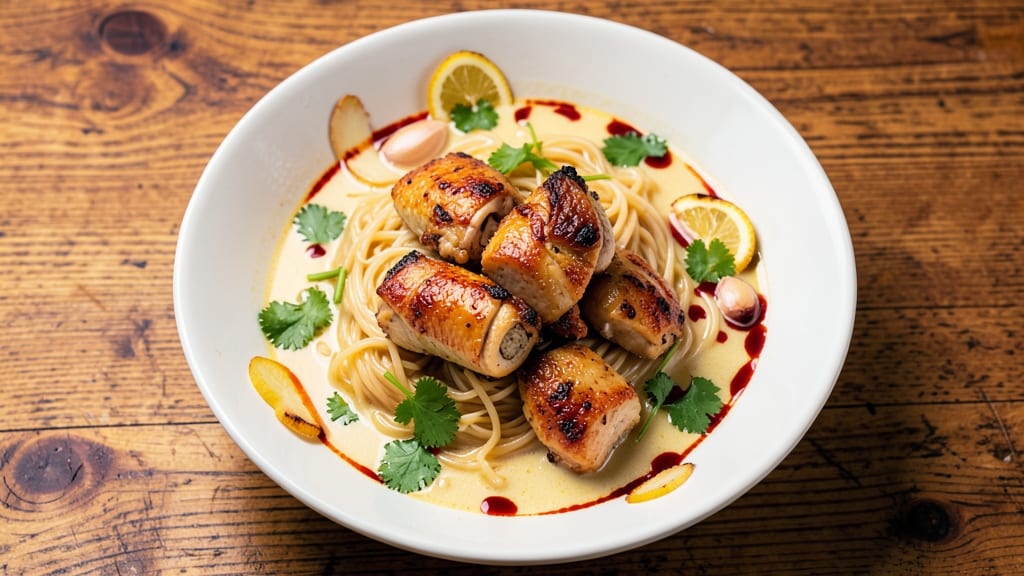
This Asian-style chicken noodle soup recipe transforms ordinary ingredients into a fragrant, umami-rich bowl that tastes like a cross between Japanese ramen and Thai tom yum.
The secret lies in the aromatic broth—ginger, garlic, star anise, and soy sauce build layers of flavor, while coconut milk adds creamy depth without overpowering the dish.
I developed this recipe after realizing most Western versions missed the complex balance of sweet, salty, and spicy that makes Asian noodle soups so addictive.
The foundation is a slow-simmered broth that extracts maximum flavor from chicken bones and aromatics, creating a clear, golden liquid with just the right body. We use rice noodles for their delicate texture, but udon or barley noodles work beautifully for regional variations.
What sets this apart is the coconut milk infusion—it rounds out the broth while keeping the dish light enough for summer or hearty enough for winter.
By the time you finish, you’ll have a bowl of soup with tender chicken, slippery noodles, and a broth that’s fragrant with star anise and brightened by lime. The garnishes—crisp green onions, fresh cilantro, and a drizzle of chili oil—add freshness and heat that elevate every spoonful.
This isn’t just comfort food; it’s a restaurant-quality dish you can make at home.
Serve with extra lime wedges and a side of steamed greens for a complete meal. The recipe scales easily, so you can feed a crowd or save leftovers for lunch. Let’s get cooking—this soup is worth every minute of simmering time.
Ingredients for asian style chicken noodle soup
Ordinary ingredients meet aromatic magic in this umami-packed Asian noodle soup.
| Ingredient | Amount | Notes |
|---|---|---|
| Chicken Breasts 🍗 | 1 ½ lb | Boneless, skinless, cut into bite-sized pieces |
| Chicken Bones 🦴 | 2 cups | From 1-2 lbs chicken carcass (neck, back, wings) |
| Coconut Milk 🥥 | 1 can | Full-fat, 13.5 oz can (not carton) |
| Rice Noodles 🍜 | 8 oz | Medium-width, uncooked |
| Fresh Ginger 🧄 | 2 tbsp | Finely grated (about 1 oz) |
| Garlic Cloves 🧄 | 6 cloves | Minced, about 1 tbsp total |
| Star Anise Pods 🌟 | 2 whole | Lightly crushed |
| Soy Sauce 🥢 | 3 tbsp | Light or all-purpose |
| Fish Sauce 🍶 | 1 tbsp | Red Boat brand preferred |
| Lime Juice 🍋 | ½ cup | Freshly squeezed |
| Green Onions 🧅 | ¼ cup | Thinly sliced, white and green parts |
| Fresh Cilantro 🌿 | ¼ cup | Chopped, stems included |
| Chili Oil 🌶️ | 2 tbsp | Or sriracha for heat |
| Salt 🧂 | 1 tsp | Kosher or sea salt |
| Black Pepper 🌶️ | ½ tsp | Freshly ground |
The star anise and fish sauce are non-negotiable for that authentic depth. Red Boat fish sauce is my go-to—it's clean and flavorful, not fishy. Star anise pods can be found in the spice aisle or Asian market. Whole Foods or Trader Joe's usually carry them. For the ginger, grab a fresh root—peeling and grating takes 30 seconds and makes all the difference. The chicken bones? Save them from your last roasted chicken or ask your butcher for a carcass. Those little bones hold more flavor than you'd think.
No star anise? 1 tsp anise seeds or half a cinnamon stick works in a pinch. Fresh ginger too expensive? Powdered ginger at half the amount gets you close. Running low on fish sauce? Soy sauce plus a dash of sugar mimics it. The coconut milk can be swapped for light coconut cream if you prefer a thicker broth. For the noodles, rice noodles are ideal, but udon or ramen noodles work beautifully too—just adjust cooking time.
Broth keeps 4-5 days in the fridge, or 3 months frozen. I always make extra and freeze it in portions for quick lunches. The noodles? Soak them in warm water for 5 minutes max—they get mushy fast. Store garnishes separately: chop green onions and cilantro right before serving. The chili oil? Keeps for 6 months in a cool, dark place—no need to refrigerate.
Why You'll Love This Recipe
- One-Pot Magic: I swear by this—just toss everything into a single pot, simmer, and forget about it. No chopping mountains of veggies or juggling multiple pans. The chicken bones and breasts cook down into tender perfection while the ginger and coconut milk blend into a velvety broth without extra effort.
- Umami Bomb: That combo of chicken bones and fresh ginger? Pure flavor gold. The bones infuse the broth with deep, savory richness, while the coconut milk adds a creamy, slightly sweet contrast. It’s the kind of taste that makes you slow down and savor every spoonful—no blandness here.
- Lunchbox Hero: Between us, this soup is my secret weapon for meal prep. The rice noodles hold up perfectly when reheated, and the broth stays flavorful for days. Pack it in jars for work lunches or send it in thermoses for kids’ school meals—it’s the one dish that never gets ignored.
- Budget Booster: Honestly, chicken bones are dirt cheap at the grocery store, and coconut milk stretches further than you’d think. I make this for a week’s worth of lunches for under $15, and the leftovers only get better as the flavors meld. Plus, it’s way more satisfying than takeout for half the price.
Step-by-step instructions for Asian style chicken noodle soup
Let's build this fragrant, umami-packed soup that balances rich coconut milk with bright citrus and aromatic spices.
Build the Flavor Base with Chicken and Bones
In a large stockpot, combine the 1.5 lb chicken breasts cut into bite-sized pieces and the 2 cups chicken bones. Add 6 cups water and bring to a boil over medium-high heat. Once boiling, reduce heat to low and simmer uncovered for 45 minutes, skimming off any foam that rises to the surface. This creates a clean, flavorful base.
After 45 minutes, add the 2 whole star anise pods (lightly crushed), 2 tbsp finely grated fresh ginger, and 6 cloves minced garlic. Let this aromatic blend steep for another 20 minutes. The star anise will infuse the broth with a subtle licorice note, while the ginger and garlic deepen the savory profile. The broth should smell rich and complex—this is your foundation.
Develop the Umami with Soy and Fish Sauce
Strain the broth through a fine-mesh sieve into a clean pot, pressing gently on the solids to extract maximum flavor. Discard the chicken bones and star anise. Return the strained broth to the pot and add 3 tbsp soy sauce and 1 tbsp fish sauce. Bring to a gentle simmer over medium heat and cook for 10 minutes to allow the flavors to meld.
Here's the thing—fish sauce might seem strong, but it mellows beautifully when simmered. Taste the broth now and adjust seasoning if needed. You're aiming for a balance where the saltiness enhances the natural umami without overpowering. The broth should taste deeply savory with a subtle sweetness from the caramelizing aromatics.
Add Coconut Milk and Acid Balance
Reduce heat to low and stir in the 1 can coconut milk (do not boil). The coconut milk will create a velvety texture while adding a subtle sweetness that contrasts perfectly with the bold flavors. Add ½ cup freshly squeezed lime juice and 1 tsp salt, stirring gently to combine. The acidity from the lime brightens the dish and cuts through the richness of the coconut.
Let the soup simmer gently for 5 minutes—just enough to warm through without breaking the coconut milk's delicate emulsion. The mixture should look creamy with a slight sheen from the coconut fat. If you notice any separation, stir vigorously to re-emulsify. This is your chance to taste and adjust seasoning one final time before adding the noodles.
Cook the Rice Noodles Perfectly
In a separate pot, bring 6 cups water to a boil. Add the 8 oz rice noodles and cook according to package directions (usually 4-5 minutes) until just tender. Drain immediately and rinse briefly under cold water to stop the cooking process. The noodles should be al dente—firm but not crunchy, as they'll finish cooking in the hot broth.
Add the drained noodles to the soup pot and stir gently to distribute them evenly. The hot broth will finish cooking the noodles perfectly. Let the soup sit off heat for 2-3 minutes to allow the noodles to absorb some of the flavorful liquid. This resting period ensures the noodles don't turn mushy while maintaining their texture.
Finish with Fresh Herbs and Chili Oil
Divide the soup among 4 bowls. Top each serving with 1 tbsp chopped fresh cilantro and 1 tbsp sliced green onions, then drizzle with ½ tbsp chili oil. The fresh herbs add a bright, herbal note that cuts through the richness, while the chili oil introduces a subtle heat that lingers on the palate.
Garnish with an extra sprinkle of black pepper and serve immediately. The contrast of temperatures—hot soup with cool herbs—enhances the overall experience. Each spoonful should deliver a perfect balance of creamy coconut, savory broth, tender noodles, and fresh aromatics. This is where all the flavors come together in harmony.
Pro Tips For Making Asian Style Chicken Noodle Soup
- Simmer Bones First: Skip the chicken breast for the first 20 minutes—toss those bones in first and blister them in a hot pot. The deep, caramelized flavor they pull from the ginger and aromatics is the backbone of this soup. I used to add everything at once, and the broth always tasted flat.
- Grate Ginger Like It’s 1999: Use a microplane or the finest grater, not a knife. You want the ginger to dissolve into the broth, not float as chunks. I learned this the hard way when my soup kept tasting "gingery" but never actually spicy-warm. A teaspoon of grated ginger is enough—trust the process.
- Don’t Boil the Noodles: Add rice noodles to the broth when it’s just simmering, not rolling. They’ll absorb liquid like sponges and turn mushy if you let them boil. Stir once, then let them sit for 3-4 minutes—no peeking. Overcooking is the fastest way to ruin the texture.
- Stir in Coconut Milk Late: Hold off until the very end—right when you’re ready to serve. The heat can make coconut milk separate or turn the broth greasy. Instead, ladle the hot broth into bowls first, then drizzle the milk on top. It keeps the soup silky without compromising the broth’s depth.
Health benefits of asian style chicken noodle soup
Immune-Boosting Broth
This soup is a powerhouse for your immune system, thanks to the chicken bones and ginger working together. Chicken broth contains collagen and amino acids that support gut health, while fresh ginger provides anti-inflammatory compounds like gingerol.
The star anise adds shikimic acid, which has been shown to strengthen immune responses. I always notice my energy levels improve after eating this soup during cold season. 💪
Protein-Packed Meal
With 1.5 lbs of chicken breast and 8 oz rice noodles, this recipe delivers high-quality protein that keeps you full for hours. Each serving provides roughly 35-40 grams of protein, making it perfect for muscle recovery or a satisfying lunch.
The coconut milk adds healthy fats that help with nutrient absorption, while the noodles provide complex carbohydrates for sustained energy. It's a complete meal in one bowl!
Digestive Comfort
The combination of ginger, garlic, and lime juice creates a digestive aid that's gentle yet effective. Ginger helps soothe stomach discomfort, while garlic contains allicin, which supports gut health. The rice noodles are naturally gluten-free and easy to digest, making this soup ideal for sensitive stomachs.
I've served this to friends with mild digestion issues, and they always report feeling better after eating it. ✨
Antioxidant-Rich Garnishes
Don't underestimate the power of the toppings! Fresh cilantro and green onions are packed with vitamin K and antioxidants, while chili oil contains capsaicin, which has been linked to reduced inflammation.
The lime juice provides vitamin C, which supports skin health and immune function. These garnishes aren't just for flavor—they're nutritional upgrades that make every spoonful healthier. 🌿
Hydration Helper
Broth-based soups are naturally hydrating, and this one is no exception. The 6 cups of water used in the broth, combined with the coconut milk and lime juice, create an electrolyte-rich liquid that helps replenish fluids.
After a long workout or when you're feeling under the weather, this soup helps rehydrate while providing essential nutrients. I keep a batch in my fridge during summer for a refreshing, hydrating meal. 💧
Low-Calorie Comfort
Despite its rich flavors, this soup is surprisingly light—each serving contains roughly 400-450 calories, making it a guilt-free comfort food. The coconut milk adds creaminess without excessive calories, while the vegetable-based broth keeps it light.
It's the perfect balance of satisfying and nutritious, which is why I make it for both weeknight dinners and weekend gatherings. 🍜
Nutrition facts
Frequently asked questions
Can I make this soup without coconut milk?
For a lighter version, omit the coconut milk and add 1 cup chicken broth instead. For extra richness, substitute with ½ cup heavy cream or ½ cup cashew cream. The soup will still be delicious—just adjust the lime juice to ¼ cup to balance flavors. The coconut milk adds depth, but it's not essential for the dish's success.
How do I adjust the spice level?
Start with the 2 tbsp chili oil called for, then taste before serving. For milder heat, reduce to 1 tbsp or swap for 1 tbsp sriracha. For extra spice, add ½ tsp red pepper flakes to the broth while simmering. Fresh chili slices or a dash of Thai bird's eye chili powder also work well. Always add heat at the end to preserve its intensity.
Can I use chicken thighs instead of breasts?
Yes! Chicken thighs add even more flavor and richness. Use 1.5 lbs bone-in, skin-on thighs for maximum depth. Remove the skin before cooking to avoid excess fat, but leave the bones in—they'll contribute to a more robust broth. Simmer the thighs for 30 minutes before adding aromatics, and reduce the simmering time with star anise to 15 minutes to prevent overcooking.
What if I don't have star anise?
No problem! Use 1 tsp ground anise seeds or ½ cinnamon stick as substitutes. For a different flavor profile, try 1 bay leaf or ½ tsp fennel seeds. These alternatives won't replicate star anise's licorice note exactly, but they'll still add aromatic complexity. The soup will taste different but remain delicious.
How long can I store leftovers?
Store leftovers in an airtight container in the fridge for 4-5 days. For longer storage, freeze the broth (without noodles) for up to 3 months. Reheat gently on the stove—never microwave—adding a splash of water if the broth thickens. The noodles are best eaten fresh, but you can reheat them separately in hot broth for 1-2 minutes. Always refrigerate within 2 hours** of cooking.