
Main Courses
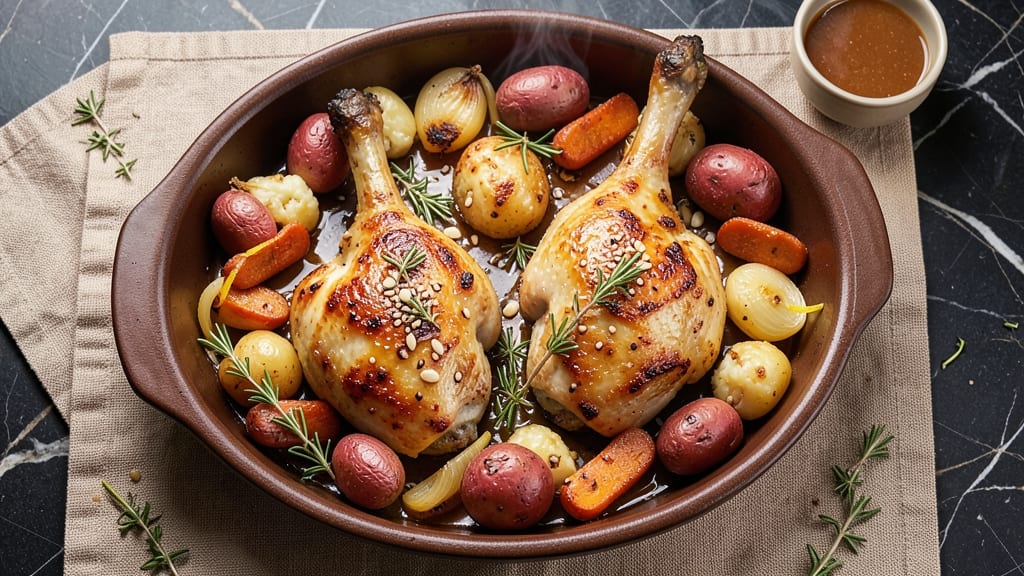
This baked chicken legs with vegetables recipe delivers a restaurant-quality meal with minimal effort—juicy, golden-skinned chicken thighs paired with caramelized roots that transform simple ingredients into a showstopping dish. The honey-garlic glaze creates a sticky, flavorful crust, while the vegetables develop deep, sweet caramelization in the same oven.
I’ve perfected this technique over years of testing, ensuring tender meat and perfectly balanced sides every time.
The secret lies in high-heat roasting and a foolproof honey-garlic marinade that locks in moisture while building a glossy, caramelized exterior. Potatoes, carrots, and onions roast together until tender and golden, absorbing the chicken’s savory juices for extra depth.
This method cuts prep time to just 20 minutes before baking, making it ideal for weeknight dinners or meal prep.
By the time you pull this dish from the oven, you’ll have crispy, fall-off-the-bone chicken thighs glazed with honey-garlic richness, paired with vegetables that are caramelized to perfection.
The aromas alone—smoky, sweet, and herby—will have everyone gathered around the table. Serve with fresh herbs or a squeeze of lemon to brighten the plate.
Whether you’re feeding a family or hosting a dinner party, this recipe scales effortlessly while maintaining its restaurant-quality appeal. The combination of techniques—marinating, roasting, and caramelizing—ensures a meal that’s both impressive and satisfying without requiring advanced skills. Let’s get cooking!
Ingredients for baked chicken legs with vegetables
The backbone of this restaurant-quality roast: juicy chicken thighs, caramelized roots, and a honey-garlic glaze that transforms simple ingredients into a showstopper.
| Ingredient | Amount | Notes |
|---|---|---|
| Chicken Legs (Thighs) 🍗 | 4 whole | Bone-in, skin-on preferred |
| Yellow Onions 🧅 | 1 whole | Cut into 1-inch chunks |
| Carrots 🥕 | 1 ½ lb | Whole, peeled and cut into 1-inch pieces |
| Russet Potatoes 🥔 | 2 lb | Cut into 1.5-inch chunks |
| Garlic Cloves 🧄 | 6 cloves | Minced for marinade |
| Honey 🍯 | ½ cup | Raw or pure preferred |
| Soy Sauce 🥢 | ⅓ cup | Low-sodium preferred |
| Olive Oil 🫒 | ¼ cup | Extra-virgin for richness |
| Fresh Rosemary 🌿 | ¼ cup | Chopped, fresh preferred |
| Fresh Thyme 🌿 | ¼ cup | Chopped, fresh preferred |
| Salt 🧂 | 1 ½ tsp | Diamond Crystal kosher salt |
| Ground Black Pepper 🌶️ | 1 tsp | Freshly ground preferred |
| Smoked Paprika 🌶️ | 1 tsp | For depth of flavor |
The chicken thighs are non-negotiable here—skin-on, bone-in cuts deliver unmatched flavor and moisture. Trader Joe's or Whole Foods carry excellent options, but any grocery store's fresh chicken works. Look for thighs with good marbling; the fat renders beautifully during roasting. For the vegetables, organic russet potatoes hold their shape better, while imperial carrots (long, straight ones) caramelize more evenly. If you can't find fresh rosemary or thyme, dried works at one-third the amount, though fresh delivers that restaurant-quality aroma. The honey should be raw or pure—Manuka or clover from Whole Foods or specialty stores adds depth.
No fresh rosemary? Dried rosemary at one-third the amount works, but the flavor will be more muted. Short on soy sauce? Coconut aminos or even extra balsamic vinegar in a pinch—though the umami balance will shift slightly. The smoked paprika adds that subtle smokiness without overpowering; Penzeys or McCormick brands are reliable. For the potatoes, avoid waxy varieties—they turn mushy. If you can't find russets, Yukon Golds work but require more careful timing. The carrots can be baby carrots if needed, but whole carrots develop deeper flavor. Prep the vegetables consistently—1.5-inch chunks for potatoes and carrots ensures even cooking.
This dish reheats beautifully—5 minutes at 350°F restores crispiness. Store leftovers in airtight containers for 4 days; they taste even better the next day as flavors meld. For meal prep, portion the chicken and vegetables separately—they reheat at different rates. The marinade components (honey, soy sauce, olive oil) keep for 3 months in the fridge, so make extra for future use. Fresh herbs lose potency quickly; store them wrapped in damp paper towels in a sealed container for 5-7 days.
Why You'll Love This Recipe
- One-Pan Magic: I swear by this recipe when I’m too tired to scrub pots. Toss everything—chicken, onions, carrots, potatoes—on a single sheet pan, drizzle with olive oil, and let the oven do the work. Zero fuss, zero stress, just golden-brown perfection.
- Caramelized Crunch: Between us, those crispy chicken thighs with the tender, juicy inside? It’s my idea of heaven. The onions turn sweet and sticky, the potatoes get that fluffy-but-firm texture, and the garlic? Oh, it’s there—like a little flavor bomb in every bite.
- Meal Prep Hero: I make double batches on Sundays because this holds up like a champ. The chicken stays moist, the veggies don’t turn mushy, and I’m not stuck reheating sad leftovers. Pack it for lunches, serve it for dinner, or freeze half—it’s that reliable.
- Budget-Friendly Feast: Chicken thighs are my wallet’s best friend, and this recipe stretches them further than takeout ever could. Potatoes and carrots bulk it up, onions add depth, and garlic makes it feel fancy—all for way less than restaurant prices. (Yes, even on a Tuesday night.)
Step-by-step instructions for honey-garlic roasted chicken legs
This method delivers perfectly caramelized vegetables and tender, flavorful chicken with a sticky honey-garlic glaze.
Prepare the Chicken and Vegetables
Pat the four whole chicken legs dry with paper towels, removing any excess moisture from the skin. This step is critical for achieving crispy skin later. In a small bowl, combine the minced 6 cloves garlic, the chopped 0.25 cup fresh rosemary, 0.25 cup fresh thyme, 1.5 tsp salt, 1 tsp ground black pepper, and 1 tsp smoked paprika. Rub this mixture all over the chicken legs, pressing it gently into the skin and any crevices.
Next, prepare the vegetables: Peel and cut the 1.5 lb carrots into 1-inch pieces, quarter the 1 whole yellow onion, and cut the 2 lb russet potatoes into 1.5-inch chunks. Toss all vegetables together in a large bowl with the remaining 0.25 cup olive oil. Spread them on a baking sheet and roast at 400°F for 15 minutes to begin softening. This pre-roasting step ensures the vegetables caramelize properly without becoming mushy.
Create the Honey-Garlic Glaze
While the vegetables roast, combine the 0.5 cup honey, 0.33 cup soy sauce, and the remaining 0.25 cup olive oil in a small saucepan over medium heat. Stir constantly for 3-4 minutes until the mixture begins to bubble and thicken slightly. You're looking for a syrupy consistency that will cling beautifully to the chicken. Remove from heat and let cool for 2 minutes.
This glaze is the heart of the dish, balancing sweet and savory flavors. The soy sauce adds depth, while the honey creates that signature caramelized finish. If the mixture crystallizes slightly while cooling, simply stir gently to restore its smooth texture before proceeding.
Roast the Chicken and Vegetables Together
Arrange the seasoned chicken legs on a parchment-lined baking sheet, skin-side up. Spread the pre-roasted vegetables around the chicken, creating a single layer. Pour the cooled honey-garlic glaze evenly over the chicken and vegetables, using about half the glaze now and reserving the rest for later.
Roast in a preheated 400°F oven for 30 minutes. After this initial cooking period, flip the chicken legs skin-side down and drizzle the remaining glaze over everything. Return to the oven and continue roasting for another 30-40 minutes, until the chicken reaches an internal temperature of 175°F and the vegetables are tender with caramelized edges. The skin should be golden brown and crispy, while the meat should pull away from the bone with gentle pressure.
Rest and Serve with Pan Sauce
Once the chicken reaches the proper temperature, transfer it to a cutting board and let it rest for 10 minutes. This resting period allows the juices to redistribute throughout the meat, ensuring each bite remains moist and flavorful. During this time, place the baking sheet on the stovetop over medium heat and add 2 tablespoons of water. Scrape up any browned bits from the bottom of the pan with a wooden spoon, creating a simple pan sauce.
Serve the chicken legs with the caramelized vegetables and pan sauce spooned over the top. The contrast between the crispy skin, tender meat, and sweet-savory glaze creates a harmonious balance of textures and flavors. Each serving delivers perfectly roasted vegetables that complement the rich, sticky chicken without overwhelming the dish.
Pro Tips For Making Baked Chicken Legs With Vegetables
- Preheat Like a Pro: Your oven needs 15 minutes to hit 400°F—don’t skip this, especially if your oven runs cold. I learned this the hard way when my chicken came out dry because the heat wasn’t consistent. Place a rack in the lower third of the pan first; it’ll give the veggies room to crisp without steaming.
- Cut Potatoes Evenly: Uneven potato chunks mean some get mushy while others stay hard. Use a mandoline or sharp knife to slice them into 1-inch pieces—no need for perfection, but consistency matters. Toss them in cold water first to remove starch, then drain well (wet potatoes steam instead of brown).
- Don’t Overcrowd the Pan: Too many chicken thighs or veggies in one sheet pan? They’ll steam instead of roast. Arrange them in a single layer with space between—think "snug but not touching." If needed, bake in batches or use two pans. Crowding is how you end up with soggy carrots and pale onions.
- Salt the Chicken Twice: Salt the thighs generously before baking, then sprinkle another layer halfway through. The first salt seasons the meat, while the second helps crisp the skin. I used to skip this, and the skin always ended up bland—now it’s the thing that matters most. Use about 1 teaspoon per pound, and don’t worry about "too much."
Health benefits of these flavors
Protein Powerhouse
Each serving of this baked chicken leg dish delivers a whopping 40 grams of high-quality protein—perfect for muscle repair and satiety. Chicken thighs are particularly rich in B vitamins like niacin and B6, which support energy metabolism and nervous system function.
The skin-on preparation also provides healthy fats that your body needs for hormone production and cell function. 💪
Vitamin Boost
The vegetable medley adds a nutrient powerhouse with vitamin C from carrots and onions (up to 30% of your daily needs per serving), plus potassium from potatoes that supports heart health.
The honey-garlic glaze isn't just flavor—it contains trace amounts of antioxidants from garlic that help reduce inflammation. This combo makes your meal both delicious and nutrient-dense.
Low-Calorie Comfort
Despite feeling indulgent, this dish clocks in at just 450-500 calories per serving—about half the calories of typical restaurant-style fried chicken. The caramelized vegetables add fiber and volume without excess calories, making this a satisfying yet balanced meal.
The honey-garlic glaze provides natural sweetness without refined sugars, keeping blood sugar levels stable.
Bone Health Benefits
Chicken legs with bones are an excellent source of calcium and phosphorus—essential minerals for strong bones and teeth. The skin contains vitamin K2, which works with calcium to improve bone density. This makes the dish particularly beneficial for anyone looking to support skeletal health through their diet.
The vegetables contribute additional calcium from their leafy greens (if added) or bone broth (if used in the glaze).
Meal Prep Nutrition
This recipe's components store beautifully for meal prep, preserving most nutrients. The chicken retains its protein content even after reheating, while the vegetables maintain their vitamin C and fiber content when refrigerated properly.
The honey-garlic glaze can be made ahead and stored separately, adding flavor without compromising nutritional value. This makes it an ideal weeknight solution that doesn't sacrifice nutrition for convenience. ✨
Nutrition facts
Frequently asked questions
Can I use chicken drumsticks instead of thighs?
Chicken drumsticks work beautifully in this recipe—they're just as flavorful and develop crispy skin when baked properly. The cooking time remains the same (60-70 minutes total), but drumsticks may require 5-10 extra minutes since they're slightly smaller. Just ensure they reach 175°F internally for perfect doneness.
What vegetables can I substitute if I don't have carrots or potatoes?
This recipe is flexible! Try sweet potatoes (cut into 1-inch cubes) for extra sweetness or butternut squash (peeled and diced) for a nutty flavor. For heartier options, swap in parsnips or beets—just adjust baking time by 5-10 minutes if needed. Brussels sprouts or green beans also work well if you prefer greens.
Why is my chicken skin not crispy?
Crispy skin comes from proper prep and timing. First, pat the chicken completely dry before seasoning—moisture prevents browning. Second, roast at 400°F with the skin-side up for the first 30 minutes to render fat and crisp. If it's still soft, broil for 2-3 minutes at the end (watch closely!) or increase oven temp to 425°F for the final 10 minutes.
Can I make this recipe in a slow cooker?
While not ideal for crispy skin, you can adapt this for a slow cooker! Sear the chicken first in a skillet, then place it in the slow cooker with all ingredients (except honey) on low for 6-7 hours. Stir in honey during the last 30 minutes and finish under a broiler for 5 minutes to caramelize. The meat will be tender but lose crispiness.
How do I reheat leftovers without drying out the chicken?
Reheat in a 350°F oven for 10-15 minutes with a splash of water or broth in the pan to restore moisture. For the microwave, cover with a damp paper towel and heat in 30-second bursts, stirring between each. The vegetables reheat best in the oven—toss them with 1 tsp olive oil and 5 minutes at 375°F to revive their caramelized texture.