
Sauces & Condiments
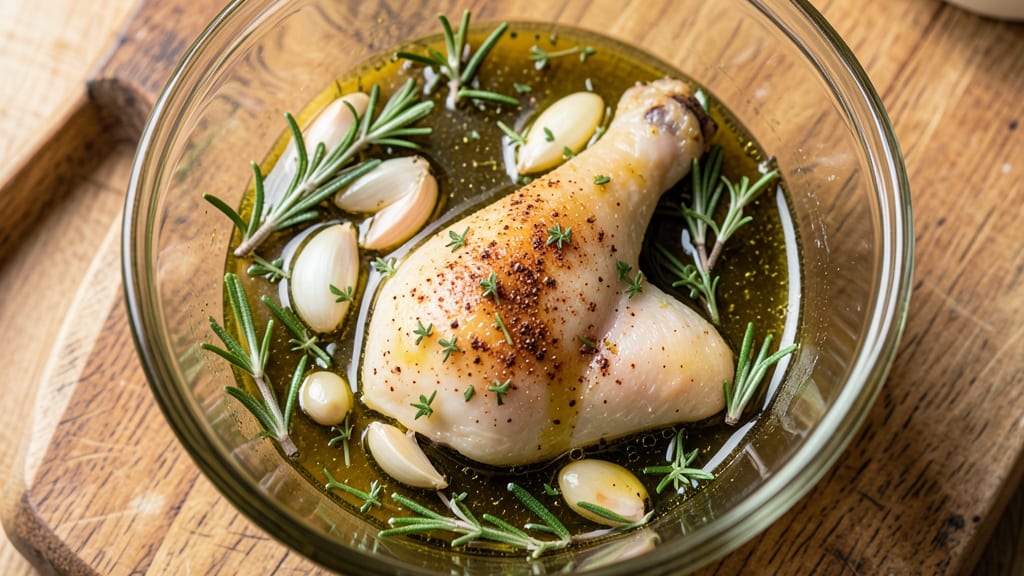
This smoky garlic-herb chicken leg marinade transforms ordinary chicken into restaurant-quality pieces with crispy skin and juicy meat—no special skills required.
I developed this blend after years of testing marinades that either left chicken dry or failed to crisp properly, and this version consistently delivers results that impress even skeptical guests. The secret lies in balancing acidity, fat, and aromatic herbs to tenderize while preserving moisture.
The marinade combines olive oil, apple cider vinegar, and a robust mix of garlic, smoked paprika, rosemary, and thyme—each ingredient playing a precise role. Olive oil carries flavor deep into the meat, while vinegar tenderizes without overpowering.
Smoked paprika adds depth, and fresh herbs ensure brightness. This blend works best when applied at least 4 hours before cooking, though overnight results are even better for maximum flavor penetration.
What you’ll achieve is chicken legs with golden, shatteringly crispy skin that gives way to tender, moist meat inside. The marinade’s smoky-sweet profile enhances the chicken’s natural flavor while creating a subtle crust when seared.
Whether you grill, bake, or air-fry, this marinade ensures perfect texture every time—no more dry, tough chicken legs.
The best part? This marinade keeps well in the refrigerator for up to 5 days or can be frozen for 3 months, making it a versatile staple for meal prep.
Use half the batch for chicken and save the rest for pork chops or vegetables. Let’s get started—your next crispy, juicy chicken is just a few steps away.
Ingredients for chicken leg marinade
Eight bold ingredients blend into a marinade that turns chicken legs into crispy, juicy masterpieces.
| Ingredient | Amount | Notes |
|---|---|---|
| Extra-Virgin Olive Oil 🫒 | ½ cup | High-quality, fruity variety preferred |
| Apple Cider Vinegar 🍏 | ¼ cup | Unfiltered for deeper flavor |
| Smoked Paprika 🌶️ | 2 tbsp | High-quality smoked variety |
| Garlic Cloves 🧄 | 6 cloves | Freshly minced for maximum punch |
| Fresh Rosemary 🌿 | ¼ cup | Finely chopped, stems removed |
| Fresh Thyme Leaves 🌿 | ¼ cup | Packed, stems removed |
| Brown Sugar 🍯 | 2 tbsp | Lightly packed for sweetness |
| Kosher Salt 🧂 | 1 ½ tsp | Diamond Crystal preferred |
| Freshly Ground Black Pepper 🌶️ | ½ tsp | Coarsely cracked for texture |
| Honey 🍯 | 1 tbsp | Raw, unprocessed preferred |
The extra-virgin olive oil is non-negotiable here—skip the cheap stuff. California Olive Ranch or Bertolli are my go-tos, but any high-quality oil with fruity notes works. The apple cider vinegar should be unfiltered and organic if possible—Bragg is reliable, but check your local market for small-batch options. Fresh herbs are essential: rosemary should smell piney and vibrant, not dusty, and thyme should be bright green with no wilting. For smoked paprika, Penzeys or McCormick's smoked version delivers that authentic depth. The garlic? Smash those cloves with the flat side of your knife first—it releases more flavor. Pro tip: Toast your spices lightly in a dry pan before mixing to wake up their aromas.
No smoked paprika? Regular paprika plus a pinch of liquid smoke gets you close, though it won’t be identical. Short on rosemary? Swap in fresh sage at half the amount—it’s got a similar earthy punch. The honey can be subbed with maple syrup if you’re avoiding it, but raw honey adds that subtle floral note. For the vinegar, white wine vinegar works in a pinch, but it lacks the complexity. The brown sugar? Lightly packed means no scooping—use a spoon to measure. Want extra crispiness? Add 1 tsp cornstarch to the marinade for a subtle crust. And if you’re prepping ahead, always marinate chicken in the fridge—never at room temperature.
This marinade keeps like a dream: up to 5 days in an airtight jar in the fridge, or 3 months frozen in ice cube trays for single-use portions. For best results, let the chicken sit in the marinade overnight—trust me, the flavor penetration is worth it. After marinating, pat the chicken dry before cooking—this ensures that shatteringly crispy skin we’re all chasing. Use any leftover marinade on pork chops, vegetables, or even grilled fish—it’s that versatile. And if you’re meal prepping, freeze the chicken legs marinated but uncooked for up to 2 months; just thaw in the fridge before cooking.
Why You'll Love This Recipe
- Five-Ingredient Magic: The pantry already has these—no grocery run needed. I swear by this combo: the vinegar tenderizes while the olive oil keeps things juicy, and the rosemary? That’s the secret aroma boost that makes it feel fancy.
- Smoky Depth in Minutes: That smoked paprika isn’t just flavor—it’s a whole vibe. The garlic and rosemary mellow out the heat, but you still get this rich, slightly charred taste that sticks to your ribs. (Yes, even on a Tuesday night.)
- Leftover Goldmine: Marinate a big batch, then use it for days: grilled, roasted, or even tossed with rice. The vinegar cuts through richness, so it never gets boring. My freezer’s always stocked with these—because why waste good flavor?
- Budget-Friendly Upgrade: Chicken legs are cheap, but this marinade makes them taste like a restaurant dish. Honestly, I’d rather eat this simple meal than some overpriced takeout. The paprika alone stretches the cost, but the whole thing? Worth every penny.
Step-by-step instructions for smoky garlic-herb chicken leg marinade
This marinade transforms ordinary chicken legs into crispy-skinned, juicy perfection with bold smoky depth.
Combine the Wet Ingredients
In a medium mixing bowl, whisk together the 0.5 cup extra-virgin olive oil and 0.25 cup apple cider vinegar until fully emulsified. The vinegar will initially resist blending, but keep whisking - you're creating the foundation for that perfect balance of acidity and richness. This combination ensures maximum penetration into the chicken's surface while preventing the marinade from becoming too heavy.
Next, stir in the 1 tbsp honey and 2 tbsp brown sugar until completely dissolved. The sugars will begin to melt slightly, creating a syrupy base that caramelizes beautifully during cooking. Here's the thing - don't rush this step. The sugars need time to fully integrate with the oil and vinegar to form a cohesive marinade that clings to the chicken rather than pooling at the bottom.
Incorporate the Aromatics and Spices
Add the 6 cloves minced garlic cloves, 0.25 cup finely chopped fresh rosemary, and 0.25 cup packed fresh thyme leaves to the bowl. Using a wooden spoon, gently fold these ingredients until they're evenly distributed throughout the marinade. The herbs should be finely chopped to maximize surface area and flavor infusion, while the garlic adds that essential punch that makes this marinade truly special.
Sprinkle in the 2 tbsp smoked paprika, 1.5 tsp kosher salt, and 0.5 tsp freshly ground black pepper. The smoked paprika is what gives this marinade its signature depth - that unmistakable campfire aroma that transforms simple chicken into something extraordinary. Use a fork to break up any clumps of paprika and ensure it's evenly dispersed. This is where the magic happens - all these components working together create a flavor bomb that will make your chicken legs irresistible.
Test and Adjust the Balance
Taste the marinade immediately after combining all ingredients. You should notice a perfect harmony of smoky, herbal, and slightly sweet flavors with a tangy kick from the apple cider vinegar. Here's the critical part - if the marinade tastes too acidic, add another 1 tsp honey to balance it. If it's not flavorful enough, add a pinch more salt or a dash of black pepper. This adjustment ensures every bite delivers that perfect flavor profile.
The marinade should be thick enough to coat the chicken but still pour smoothly. If it's too thick, add 1-2 tablespoons of water to achieve the ideal consistency. The right texture guarantees even coating and maximum flavor transfer during the marinating process. Real talk: this step makes all the difference between good chicken and showstopping chicken that has everyone asking for seconds.
Marinate for Maximum Flavor Development
Place the chicken legs in a large resealable plastic bag or glass dish and pour the marinade over them, ensuring each piece is completely coated. Seal the bag or cover the dish and refrigerate for at least 4 hours, but I recommend marinating overnight for best results. The acid in the vinegar begins breaking down the chicken's proteins immediately, while the oil and sugars work their magic to create that irresistible crispy skin and juicy interior.
Here's what you're aiming for: after marinating, the chicken should absorb enough flavor that when you press your finger into it, you can smell the rosemary and garlic. The skin will develop a slightly sticky surface from the honey and sugar caramelization. Don't skip this step - the longer the marinade works, the more tender and flavorful your chicken will become. This is your secret weapon for restaurant-quality results at home.
Pro Tips For Making Chicken Leg Marinade
- Mince That Garlic: I learned this the hard way—whole cloves in marinade just sit there like decorative rocks. Crush those garlic cloves with the flat side of your knife first, then mince them fine. The oil will absorb the flavor properly, not just sit on top like a garnish.
- Balance the Vinegar: Apple cider vinegar packs a punch, and if you don’t temper it, your marinade will taste like a science experiment gone wrong. Start with 1 tablespoon per ½ cup of oil, then adjust—taste it before adding to the chicken. You can always add more oil, not more vinegar.
- Let It Bloom: Don’t toss the chicken in right away. Mix the marinade ingredients first, then let them sit for 10 minutes before adding the chicken. This lets the smoked paprika and garlic release their oils, so the flavor penetrates deeper than if you just dump everything together.
- Skip the Crowding: If you’re marinating in a container, resist the urge to stack the chicken legs like cordwood. They’ll steam instead of absorb, and the marinade will turn into a sad, watery soup. Lay them flat in a single layer—yes, even if it takes two batches.
Wine and beer pairings for this chicken leg marinade
Red Wine Pairings
A medium-bodied Chianti Classico from Tuscany is my go-to pairing for this smoky garlic-herb chicken. The bright acidity and cherry notes cut through the richness of the chicken while complementing the rosemary and thyme.
I recommend a 2019-2021 vintage—young enough to be vibrant but with enough structure to stand up to the marinade’s depth. Serve slightly chilled (55-60°F) to enhance its freshness against the warm, crispy chicken. 🍷
White Wine Options
For those who prefer whites, a dry Riesling from Germany’s Mosel region offers surprising harmony. The wine’s crisp acidity and subtle mineral notes balance the smoky-sweet profile of the marinade beautifully.
Look for a Kabinett or Spätlese—these have enough body to complement the chicken without overwhelming it. Serve at 45-50°F to preserve its refreshing qualities.
Craft Beer Pairings
A honey brown ale like Allagash Honey Brown brings out the caramelized notes from the marinade’s brown sugar while its malty sweetness mirrors the honey. The beer’s low bitterness lets the chicken’s smoky flavors shine.
For a lighter option, try a Belgian witbier—the coriander and citrus notes create an unexpected but delightful contrast with the rosemary and garlic. 🍺
Cider Complements
Don’t overlook dry hard cider—a strong, tannic variety like Angry Orchard Dry or Woodchuck Hard Cider pairs surprisingly well. The cider’s acidity and subtle apple notes echo the apple cider vinegar in the marinade, while its tannins help cleanse the palate between bites.
Serve slightly chilled (45-50°F) for the best experience.
Non-Alcoholic Choices
For a refreshing non-alcoholic option, sparkling hibiscus tea (chilled) adds a floral note that complements the rosemary while its acidity balances the richness. Alternatively, a ginger beer with a squeeze of lime enhances the smoky-sweet profile without overpowering the chicken. Both options work beautifully for brunch or family gatherings. 💫
Serving Temperature Tips
Wine and beer should be served at the right temperature to highlight their flavors. Whites and ciders should be chilled to 45-50°F, while reds like Chianti should be slightly cooler than room temperature (55-60°F).
I always use an ice bucket with a towel for whites and a wine fridge for reds—never the freezer, as it can dull the flavors. Pro tip: Let your beer or cider sit at room temperature for 10-15 minutes before serving to soften its carbonation and enhance aroma. ✨
Nutrition facts
Frequently asked questions
Can I use this marinade for other meats besides chicken legs?
This smoky garlic-herb blend works beautifully on pork chops, salmon fillets, and even tofu for a meatless option. The balance of acidity and fat helps tenderize proteins while adding flavor. Just reduce marinating time for delicate fish to 30-60 minutes to avoid over-tenderizing.
What's the best way to store leftover marinade?
Store unused marinade in an airtight container in the fridge for up to 5 days or freeze it in ice cube trays for 3 months. For maximum freshness, use a clean spoon each time to avoid contamination. The honey and vinegar help preserve it naturally, but always refrigerate after opening.
Why does my chicken skin stay rubbery after using this marinade?
Rubbery skin usually means the chicken wasn't dried properly before cooking. Pat the marinated chicken legs very thoroughly with paper towels to remove all moisture—this creates the perfect surface for crispy skin. Also ensure you're cooking at high heat (like 425°F) for the final sear.
Can I make this marinade without honey or brown sugar?
Yes, but you'll lose some of the caramelization that helps create crispy skin. Substitute with 1 tbsp maple syrup or 1 tbsp extra olive oil to maintain moisture. The smoky-sweet balance will be slightly different, but still delicious. For extra crispiness, add 1 tsp cornstarch to the marinade instead.
How do I adjust this for spicier preferences?
For extra heat, add ½-1 tsp cayenne pepper or 1 tbsp hot sauce to the marinade. For a smoky kick without heat, increase the smoked paprika to 3 tbsp. Always taste as you go—start with smaller amounts and adjust gradually to avoid overwhelming the chicken's natural flavor.