
Sauces & Condiments
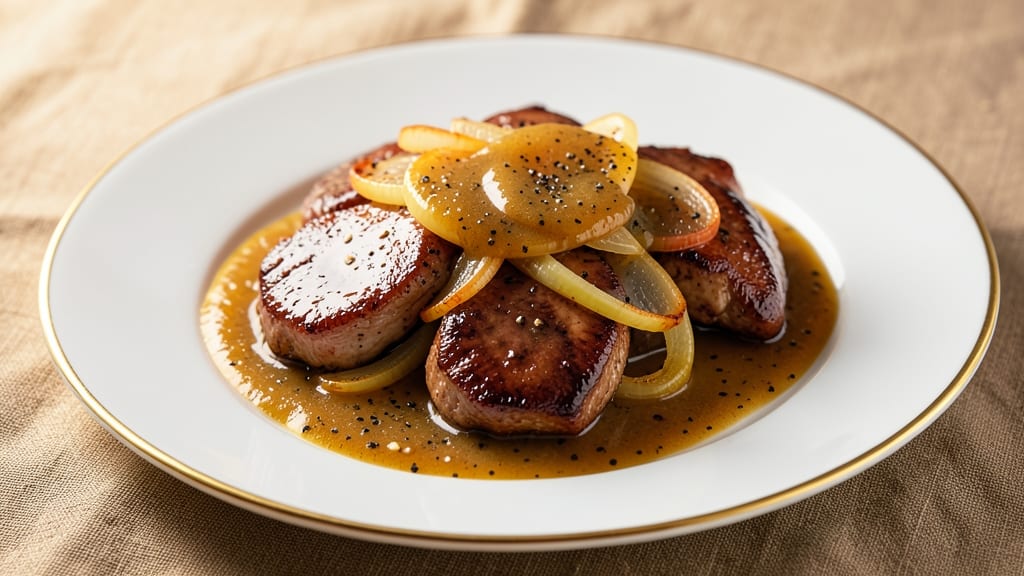
Mastering chicken liver and onions with gravy transforms simple leftovers into a restaurant-worthy dish that feels like a chef's secret. This technique—searing the livers until perfectly tender while building a rich pan sauce—is where home cooking meets professional precision.
I developed this method after years of working with offal in Charleston kitchens, where nothing goes to waste and every pan dripping becomes something extraordinary.
The key lies in the gravy: a velvety sauce made from the pan's caramelized fond, flour, and high-quality broth that clings to each forkful. We'll start with onions caramelized until they're sweet and golden, then sear the livers just until they reach medium doneness—never overcooked.
The result is a dish that balances earthy richness with subtle sweetness, elevated by a sauce so luxurious it makes every bite feel special.
What makes this recipe stand out is its versatility—serve it alongside crusty bread to soak up every drop of gravy, or pair it with roasted root vegetables for a hearty weeknight meal. The technique works equally well with fresh livers or properly stored leftovers, making it both practical and impressive.
This is comfort food at its finest, where humble ingredients become something extraordinary with the right technique.
Ready in just 30 minutes, this dish delivers restaurant-quality results without the fuss. The secret is paying attention to the pan and building flavor gradually, layer by layer. Let's get started on a recipe that proves even the simplest ingredients can become something truly memorable.
Ingredients for chicken liver and onions with gravy
Precision-crafted ingredients transform humble livers into a luxurious dish with velvety gravy.
| Ingredient | Amount | Notes |
|---|---|---|
| Fresh Chicken Livers 🍗 | 1 lb | Trimmed of connective tissue |
| Yellow Onions 🧅 | 2 large | Thinly sliced, uniform thickness |
| Unsalted Butter 🧈 | 4 tbsp | European-style preferred |
| Diamond Crystal Kosher Salt 🧂 | 1 ½ tsp | Adjust to taste |
| Freshly Ground Black Pepper 🌶️ | ½ tsp | Cracked peppercorns preferred |
| All-Purpose Flour 🌾 | 2 tbsp | Sifted for smooth sauce |
| Chicken or Vegetable Broth 💧 | 1 cup | Homemade preferred, low-sodium |
| Dry Sherry or White Wine 🍷 | ¼ cup | Substitute with extra broth |
| Fresh Thyme Leaves 🌿 | ¼ tsp | Or 1/8 tsp dried thyme |
| Fresh Parsley Leaves 🌿 | ¼ cup | Chopped for garnish |
| Heavy Cream 🥛 | ¼ cup | Full-fat for richness |
| Large Eggs 🥚 | 2 whole | Separated for sauce binding |
| Extra-Virgin Olive Oil 🫒 | 1 tbsp | For final drizzle |
The chicken livers require meticulous preparation: trim all connective tissue and silver skin for optimal texture. Fresh livers from a trusted butcher—like D'Artagnan or your local poultry counter—yield the best results. Store them in the coldest part of your fridge, wrapped in paper towels, and use within 2 days for peak tenderness. Yellow onions should be firm with dry skins; Sweet onions like Vidalia add subtle sweetness that pairs beautifully with the earthy livers. The butter should be cold but not hard—softened European-style butter develops richer flavor during searing.
Substitutions must maintain the dish's balance. No sherry? Dry white wine or additional broth works, but reduce by 2 tbsp to account for alcohol content. For a dairy-free version, replace heavy cream with coconut cream, though texture will differ slightly. Fresh thyme and parsley can be swapped for dried at one-third the amount, but fresh herbs elevate the dish's brightness. The eggs are critical for sauce emulsification—use room-temperature eggs for smoother binding. If your livers are particularly fatty, pat them dry with paper towels before cooking to prevent splattering.
This dish reheats beautifully—simmer gently on the stove with a splash of broth to restore its velvety texture. Store leftovers in an airtight container for up to 3 days, or freeze portions for 3 months in a sealed container. The gravy thickens upon reheating, so thin with additional broth if needed. For presentation, drizzle with extra-virgin olive oil and garnish with fresh parsley just before serving. The sauce's richness pairs perfectly with crusty sourdough or buttery mashed potatoes.
Why You'll Love This Recipe
- One-Pan Magic: That’s right—just one skillet, no fuss. Sear the livers in butter until golden, toss in sliced onions, and let them caramelize while the gravy thickens. I swear, the cleanup is so minimal, you’ll feel like a lazy genius.
- Rich, Deep Umami: The livers? Buttery and tender with a crispy edge. The onions? Sweet, jammy perfection. And that gravy—thick, savory, and clinging to every bite? Honestly, it’s the kind of dish that makes you want to close the fridge door and savor it.
- Weeknight Workhorse: This feeds a crowd or just me after a long day. Double the batch for leftovers that reheat beautifully, or serve it with toasted bread for a hearty brunch. Between us, it’s my go-to when I don’t want to think too hard.
- Budget-Friendly Luxury: Chicken livers are cheap, but they taste like a fancy dinner. A pound goes a long way, and the butter and onions stretch the flavor without breaking the bank. It’s the kind of recipe that makes you feel fancy without the price tag.
Step-by-step instructions for chicken liver and onions with gravy
Master this classic preparation with precise technique and rich flavor development.
Prepare and Sear the Chicken Livers
Begin by trimming any visible connective tissue from the 1 lb fresh chicken livers using a sharp knife. Rinse them thoroughly under cold water and pat completely dry with paper towels—this ensures a proper sear. In a large skillet, melt 2 tbsp of the unsalted butter over medium heat until foaming. Add the livers in a single layer and cook undisturbed for 2-3 minutes per side until they develop a deep golden crust.
Here's the thing—don't overcrowd the pan. If you need to work in batches, resist the urge to add more butter between batches. The rendered fat from the livers will create enough flavor without dilution. Season immediately with 1 tsp of the diamond crystal kosher salt and 0.25 tsp of the freshly ground black pepper while they're still hot. Transfer the cooked livers to a plate and tent loosely with foil to keep warm.
Develop the Onion and Wine Base
In the same skillet (no need to clean it—the fond is pure flavor), add the remaining 2 tbsp unsalted butter and swirl to coat the pan. Add the 2 large yellow onions that have been thinly sliced to uniform thickness. Cook over medium heat for 8-10 minutes, stirring occasionally, until the onions soften and begin to caramelize at the edges. This process should take patience—watch for the onions to turn golden brown in spots.
Once the onions are tender and slightly sweet, pour in the 0.25 cup dry sherry or white wine. Scrape up any browned bits from the bottom of the pan with a wooden spoon—this deglazing step captures all the concentrated flavors. Let the wine simmer for 2-3 minutes until it reduces by half, intensifying the aroma. Sprinkle in the 0.25 tsp fresh thyme leaves and stir briefly to combine.
Thicken the Gravy with Egg Yolks
Separate the 2 whole large eggs, keeping the yolks in the bowl. In a small bowl, whisk together the egg yolks, 0.25 cup heavy cream, and the remaining 0.5 tsp diamond crystal kosher salt. Temporarily remove the skillet from heat and carefully pour the yolk mixture into the onions, whisking constantly for 1-2 minutes until the sauce begins to thicken. This is the moment that matters—heat must be gentle to prevent scrambling the eggs.
Return the skillet to low heat and stir continuously for another 2-3 minutes until the sauce reaches a velvety consistency. If the sauce thickens too quickly, add 1-2 tablespoons of the chicken or vegetable broth to loosen it. The finished gravy should coat the back of a spoon smoothly. Return the seared chicken livers to the skillet and toss gently to coat them evenly in the sauce.
Finish with Cream and Garnish
Reduce heat to low and stir in the 0.25 cup fresh parsley leaves and remaining 1 tbsp unsalted butter. Let the mixture simmer gently for 1 minute to allow the flavors to meld. The parsley should be just wilted, not fully cooked—this preserves its bright flavor. Taste and adjust seasoning with additional salt or pepper if needed, remembering that the livers already carry significant flavor.
For final presentation, drizzle with 1 tbsp extra-virgin olive oil and garnish with additional chopped parsley. Serve immediately with crusty bread or over buttered egg noodles. The livers should be tender but still hold their shape, coated in a glossy, rich gravy that balances their earthy flavor with bright acidity and creamy texture.
Pro Tips For Making Chicken Liver And Onions With Gravy
- Trim the Gall Bladders: Chicken livers come with tiny green gall bladders attached—leave them in, and you’ll get bitter, metallic-tasting livers. Snip them off with kitchen scissors or a sharp knife before rinsing, or you’ll spend the next 10 minutes fishing them out of your pan. (I learned this the hard way after a batch tasted like pennies.)
- Sear in Batches: High heat is non-negotiable for crispy livers, but overcrowding the pan steams them instead of searing. Work in 1-inch-thick layers—no more than 4-5 livers at a time—so they sizzle, not sweat. (Yes, even if you’re impatient like me.)
- Deglaze with Onion Juice: After searing, don’t just splash in water or broth—toss in the caramelized onion bits from your sautéed onions. They’re packed with flavor, and scraping them up with a wooden spoon guarantees a richer gravy. (This is the thing that makes my gravy taste like it came from a bistro, not a weeknight.)
- Rest Before Serving: Livers finish cooking while resting—skip this, and they’ll turn rubbery. Transfer them to a plate, tent loosely with foil, and let sit 5-10 minutes. The internal temp will climb to perfect doneness, and the juices redistribute. (I was skeptical until I tried it—now I never skip it.)
Essential equipment for perfect results
Skillet Selection
For this recipe, I swear by a 12-inch cast iron skillet—it retains heat beautifully and develops that essential fond. My vintage Lodge pre-seasoned skillet (I've had it since my apprenticeship) is my go-to, but any well-seasoned cast iron will do.
If you don't own cast iron, a heavy stainless steel skillet like All-Clad Stainless works too, though you'll need to monitor heat more carefully to prevent sticking. 🔥
Heat Control Tools
Precision is key when searing livers, so I recommend a thermometer probe like the Thermoworks Thermapen to monitor pan temperature. Aim for 325-350°F—any hotter and you risk burning the outside before the inside cooks.
A silicon spatula (I use OXO Good Grips) helps scrape up those flavorful fond bits without scratching your pan.
Deglazing Essentials
Your deglazing tools matter just as much as the technique. A wooden spoon (not metal) is ideal for scraping up fond without damaging your pan's seasoning. I keep a small whisk handy for quickly incorporating the wine and reducing it evenly.
For the egg yolk mixture, a heatproof ramekin prevents curdling while you whisk over the hot pan.
Gravy Thickening Kit
The egg yolk mixture requires gentle heat control, so I always have a small bowl (preferably glass) for whisking and a fine-mesh sieve to strain any potential lumps. A ladle helps portion the finished gravy neatly onto plates.
For extra richness, I sometimes add a splash of cream through the sieve while whisking—this creates an ultra-smooth texture.
Presentation Tools
For that restaurant-worthy finish, I use a small offset spatula to arrange the livers artfully on plates. A microplane lets me freshly grate nutmeg or zest lemon over the top at the last minute.
And don't skip the tweezers for placing those perfect parsley garnishes—it's the little details that make home cooking feel special.
Nutrition facts
Frequently asked questions
Why do chicken livers need to be trimmed before cooking?
Trimming removes connective tissue and silver skin that can make the livers tough or bitter. Fresh livers from a trusted butcher should be cleaned and patted completely dry before searing—this ensures even cooking and maximum flavor absorption from the pan sauce.
Can I substitute wine with something else in the gravy?
Yes! Use 0.25 cup chicken broth instead of sherry or white wine, but reduce the amount by 2 tbsp since broth has no alcohol to evaporate. For extra brightness, add 1 tsp lemon juice to mimic the acidity of wine. The key is deglazing the pan to capture fond flavors.
What's the best way to fix overcooked chicken livers?
If your livers are dry or rubbery, they're overdone. The fix: Slice them thinly and quickly sear in butter for 30 seconds per side—this creates a crispy exterior that masks the texture. Immediately add to the gravy to rehydrate and balance flavors. Never serve overcooked livers—they should be tender but still hold their shape.
How do I make the gravy extra rich without heavy cream?
Replace the heavy cream with 0.25 cup crème fraîche or sour cream for tangy richness, or use 0.25 cup whole milk + 1 tbsp butter. For depth, add 1 tsp Dijon mustard—it emulsifies beautifully and adds complexity. The egg yolks are your secret weapon for velvety texture regardless of substitutions.
Can I prepare this dish ahead of time?
Cook the livers and onions 1 day ahead, then refrigerate separately. Reheat the livers gently in butter, then make fresh gravy from scratch using the reserved pan drippings. For make-ahead gravy, cool it completely, then reheat on low with a splash of broth—stir constantly to prevent separation.