
Sauces & Condiments
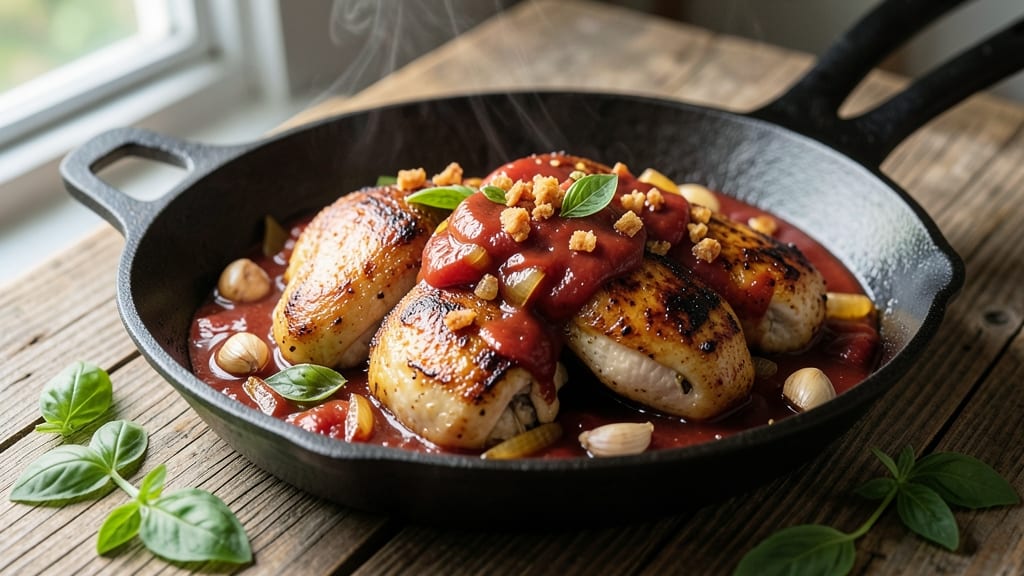
This Grandma's Chicken Cacciatore recipe with tomato sauce is the kind of dish that transforms a simple weeknight dinner into something special—rich, aromatic, and full of the kind of flavors that linger long after the last bite.
Growing up, I watched my grandmother prepare it with an effortless confidence, her handwritten recipe card tucked in the drawer like a secret treasure.
The key lies in the slow simmering of chicken in a deep, tangy tomato sauce infused with wine, herbs, and the kind of patience that turns tough cuts into tender, melt-in-your-mouth perfection.
The beauty of this recipe is in its balance—bold enough to stand alone but flexible enough to adapt to your kitchen.
You’ll start by searing chicken thighs to lock in their juices, then build layers of flavor with garlic, onions, and a splash of red wine that deglazes the pan into a fragrant base.
The tomato sauce, simmered low and slow, becomes the heart of the dish, its acidity softened by herbs and a touch of sugar, creating a sauce that’s both vibrant and deeply comforting. It’s the kind of recipe that rewards attention but doesn’t demand perfection—just time and a little love.
By the time you serve it, you’ll have a dish that’s restaurant-quality without the fuss: golden-brown chicken pieces swimming in a glossy, herby tomato sauce, its edges just slightly caramelized.
The aroma alone will have everyone gathering at the table, and the first bite—tender chicken, rich sauce, and a hint of wine—will remind you why home-cooked meals are worth every minute. Pair it with crusty bread to soak up the sauce, or serve it over pasta for a heartier meal.
This is the kind of recipe that becomes a family tradition, passed down not just on paper, but through the stories and memories it creates.
What makes this recipe truly special is how it bridges tradition and simplicity. My grandmother’s notes were vague—"a splash of wine," "until the sauce thickens"—but the result was always the same: a dish that tasted like home.
Here, I’ve translated those instincts into clear, foolproof steps, so you can achieve the same depth of flavor without the guesswork. Let’s get cooking—your kitchen will smell like Sunday dinner before you know it.
Ingredients for grandma's chicken cacciatore recipe with tomato sauce
These 14 ingredients transform a simple weeknight into a taste of Sunday dinner.
| Ingredient | Amount | Notes |
|---|---|---|
| Chicken Thighs 🍗 | 1 ½ lb | Bone-in, skin-on preferred |
| Yellow Onion 🧅 | 1 whole | Medium size, diced |
| Garlic Cloves 🧄 | 6 cloves | Fresh, minced |
| Red Wine 🍷 | ½ cup | Bold, dry variety |
| Canned San Marzano Tomatoes 🍅 | 1 can | 28 oz, crushed by hand |
| Chicken Broth 💧 | ½ cup | Low-sodium preferred |
| Fresh Rosemary 🌿 | ¼ cup | Chopped, stems removed |
| Fresh Thyme 🌿 | ¼ cup | Leaves only, chopped |
| Olive Oil 🫒 | ⅓ cup | Extra-virgin for richness |
| Tomato Paste 🍅 | 2 tbsp | Smooth, not chunky |
| Granulated Sugar 🍬 | 1 tbsp | Balances acidity |
| Salt 🧂 | 1 ½ tsp | Kosher or sea salt |
| Black Pepper 🌶️ | ½ tsp | Freshly ground preferred |
| Fresh Parsley 🌿 | ⅛ cup | Chopped, for garnish |
The chicken thighs are the star—bone-in, skin-on for maximum flavor, but boneless works if that's what you've got. Trader Joe's or Costco usually have them pre-cut for convenience, but if you're buying whole, look for thighs with good marbling. The onions and garlic? Fresh is non-negotiable here—they're the flavor base. I always grab extra garlic because it's used in almost every dish. For the tomatoes, San Marzano is the gold standard, but any good-quality crushed tomatoes will do. The wine? Cabernet Sauvignon or Merlot from the grocery store's selection works perfectly—no need for fancy bottles.
No red wine? Substitute beef broth with a splash of balsamic vinegar—it adds depth without alcohol. Fresh rosemary and thyme are ideal, but dried works at one-third the amount. If you're short on time, frozen chopped spinach (thawed and drained) can bulk up the sauce nicely. The tomato paste can be a squeeze tube if you hate opening cans—Trader Joe's sells them. For the sugar, honey works too, but sugar dissolves more easily. The parsley is just for garnish, but if you're feeling fancy, add a sprinkle of fresh basil at the end.
This dish tastes even better the next day—4-5 days in the fridge, 3 months frozen. I always make extra because it reheats beautifully. Store it in the fridge in a sealed container, and the sauce will thicken even more overnight. For freezing, portion it into meal-sized containers so you can grab just what you need. The chicken stays juicy if you reheat it gently in the sauce—no microwaving dry chicken here!
Why You'll Love This Recipe
- One-Pan Magic: I swear by this for nights when I’d rather not wash a million dishes. The onions caramelize right alongside the chicken, and the wine reduces into a glossy sauce without any extra pots—just one skillet, one spatula, and 10 minutes of hands-off time.
- Wine-Infused Depth: That splash of red wine isn’t just for show—it melts into the San Marzano tomatoes and creates this rich, almost velvety sauce. The garlic cloves? They sizzle until they’re fragrant but not bitter, and the chicken thighs stay juicy while the edges get that crispy, golden crust. Honestly, it’s the kind of flavor that makes you pause mid-bite.
- Leftovers That Don’t Suck: Between us, most casseroles turn into sad, dry meals the next day. Not this. The sauce thickens just enough to cling to the chicken, and the acidity from the tomatoes keeps it bright. I’ve reheated portions for lunch for three days straight, and it’s still better than takeout.
- Budget-Friendly Feast: Chicken thighs are cheaper than breasts, and a single can of San Marzano tomatoes stretches into two meals. The onion and garlic are pantry staples, and the wine? Even a cheap bottle makes this taste like a splurge. It’s the kind of dish where the ingredients work with you, not against your wallet.
Step-by-step instructions for grandma's chicken cacciatore
Here's how to build this comforting classic with layers of flavor and tender chicken.
Sear the Chicken Thighs for Deep Flavor
Heat the 0.33 cup olive oil in a large Dutch oven over medium-high heat. Pat the 1.5 lb chicken thighs dry with paper towels—this ensures a good sear. Season both sides generously with 1.5 tsp salt and 0.5 tsp black pepper, then place them skin-side down in the pan. Let them sear undisturbed for 6-7 minutes until the skin is golden brown and crispy.
Flip the chicken thighs and cook for another 5-6 minutes until they're golden on the other side and the internal temperature reaches 165°F. Remove them from the pan and set aside on a plate. The rendered fat in the pan will become the base of your sauce, so don't wipe it out—this is where all the flavor hides.
Build the Herb and Tomato Base
In the same Dutch oven, add the 1 whole yellow onion and cook over medium heat for 5 minutes until softened. Stir in the 6 cloves minced garlic cloves and cook for 30 seconds until fragrant—don't let it brown or it'll turn bitter. Add the 2 tbsp tomato paste and stir for 1 minute to toast it slightly.
Pour in the 0.5 cup red wine and scrape up any browned bits from the bottom of the pan. Let it simmer for 3-4 minutes until reduced by half. Stir in the 1 can crushed San Marzano tomatoes, 0.5 cup chicken broth, 1 tbsp granulated sugar, 0.25 cup chopped fresh rosemary, and 0.25 cup chopped fresh thyme. Bring to a gentle simmer.
Simmer the Chicken Until Tender
Return the chicken thighs to the Dutch oven, skin-side up. Reduce the heat to low and cover with a lid. Let it simmer gently for 45-50 minutes, turning the chicken occasionally. You want the liquid to reduce slightly, coating the chicken in a rich, glossy sauce. The chicken is done when it's fork-tender and the sauce has thickened to a velvety consistency.
Here's the thing—don't rush this step. The slow simmer is what develops all those deep, complex flavors. If the sauce gets too thick before the chicken is done, add a splash of water or broth to keep it balanced. Taste and adjust seasoning with more salt if needed.
Finish and Garnish
Once the chicken is tender, remove it from the sauce and transfer to a serving platter. Strain the sauce through a fine-mesh sieve if you prefer a smoother texture, or leave it slightly chunky for rustic flavor. Return the sauce to the Dutch oven and simmer for another 5 minutes to reduce it slightly more.
To serve, spoon the sauce over the chicken thighs. Garnish with the 0.125 cup chopped fresh parsley and serve immediately with crusty bread or over pasta. The sauce should cling beautifully to the chicken, offering a perfect balance of sweet, tangy, and herby notes in every bite.
Pro Tips For Making Grandma'S Chicken Cacciatore Recipe With Tomato Sauce
- CRISP THE SKIN FIRST: Pat the chicken thighs bone-dry before searing—this isn’t just about looks. I used to skip this with skin-on thighs, and the sauce would steam instead of caramelize. Hit them skin-side down in a cold pan, then turn the heat to medium-low once they release. Let that fat render slowly—rushing it makes the skin soggy later.
- SWEAT ONIONS LOW AND LONG: Onions should dissolve into a thick paste, not just soften. After the initial sear, push the chicken aside, add your onions, and cook them on low heat for 10-15 minutes—yes, even if they look like they’re burning. Stir occasionally, but don’t rush. This builds flavor that shortcuts can’t replicate.
- DEGLAZE WITH WINE, THEN WAIT: Pour in the red wine right after removing the chicken, then immediately scrape up those browned bits—this is the holy grail of flavor. Let the wine reduce by half before adding tomatoes, or you’ll dilute the sauce into a weak, watery mess. I learned this after making a batch that tasted like sad wine punch.
- SIMMER TOMATOES UNTIL THICK: After adding San Marzano tomatoes, let the sauce bubble away covered for at least 30 minutes on low heat. You want it to reduce until it coats the back of a spoon—this concentrates the sweetness and balances the acidity. Skim off any foam that rises, or your sauce will look cloudy.
Common mistakes when making perfect results
Skipping the Sear
I’ve made this mistake more times than I’d like to admit—skipping the sear on the chicken thighs. That golden crust isn’t just about looks; it’s where the Maillard reaction happens, locking in deep, savory flavors.
If you’re short on time, at least brown the chicken for 3-4 minutes per side—it makes a world of difference. Trust me, the first time I served unseared chicken to my family, my grandmother’s ghost probably haunts me still. 🔥
Overloading the Pan
Crowding the Dutch oven with too many chicken thighs at once will steam them instead of sear, leading to gray, soggy skin. Work in batches of 2-3 thighs if needed, and give them space to breathe.
I learned this the hard way when I tried to rush and ended up with chicken that tasted more like boiled than braised. A 12-inch cast iron skillet works well if you don’t have a Dutch oven, but avoid nonstick—it won’t get hot enough for a proper sear.
Ignoring the Wine Reduction
The red wine isn’t just there for flavor—it’s the secret to a rich, balanced sauce. Skipping the 3-4 minute reduction means you’ll end up with a thin, watery sauce instead of a glossy, concentrated one.
Let it simmer until it’s reduced by about half before adding the tomatoes. Pro tip: Use a bold, dry wine like Cabernet Sauvignon—cheap wine with high acidity will make your sauce taste harsh. 🍷
Rushing the Simmer
Low and slow is the name of the game here. If you crank the heat too high, the chicken will toughen instead of tenderize, and the sauce will turn gluey. Keep the heat at low and let it simmer covered for the full 45-50 minutes.
I’ve seen people walk away for just 10 minutes and come back to find the sauce reduced to a paste—don’t be that person. Patience is key, especially if you’re using bone-in thighs.
Forgetting to Deglaze
Those browned bits stuck to the bottom of the pan? That’s fond, and it’s packed with flavor. If you don’t deglaze with the wine, you’re missing out on layers of depth in your sauce.
Scrape the pan vigorously with a wooden spoon—don’t just pour the wine in and walk away. This step is what transforms a good sauce into a restaurant-quality one.
I once made this mistake and served a dish that tasted like it was missing something… until I realized what I’d done. 💡
Over-Salting the Sauce
Tomato sauce can be tricky with salt—it’s easy to overdo it, especially if you’re adding extra seasonings. Taste as you go, and remember that salt builds in flavor as the sauce simmers. If you’re unsure, err on the side of less salt and adjust at the end.
I’ve ruined more sauces than I’d like to admit by over-salting, so trust your taste buds. A pinch of black pepper at the end can also brighten up the flavors if needed.
Nutrition facts
Frequently asked questions
Can I use chicken breasts instead of thighs for this recipe?
Chicken breasts will work, but they're leaner and more prone to drying out during the long simmer. If you must use them, pound them to an even thickness (½-inch) and reduce the cooking time to 30-35 minutes. For best results, marinate them in ½ cup olive oil, 2 tbsp red wine, 1 tsp salt, and ½ tsp black pepper for at least 1 hour before cooking.
What's the best way to reheat leftovers?
Reheat gently in the sauce to keep the chicken moist. Place the dish in a 350°F oven for 20-25 minutes covered with foil, or warm on the stovetop over low heat for 10-12 minutes. Avoid microwaving—it turns the chicken rubbery. The sauce will thicken further when reheated, making it even more flavorful!
Can I make this dish vegetarian?
Swap the chicken for portobello mushrooms, chickpeas, or eggplant cut into chunks. For mushrooms, sear them first to develop flavor. Add 1 tbsp soy sauce to the sauce for umami depth. The cooking time will be shorter (25-30 minutes total), but the technique remains the same.
Why does my sauce taste too acidic?
The acidity likely comes from unbalanced tomatoes or wine. Fix it by adding 1 tbsp sugar or ½ tsp honey to sweeten, or a pinch of baking soda (just ⅛ tsp) to neutralize. Let the sauce simmer for 5 minutes after adding. For future batches, reduce the wine to ¼ cup and add 1 extra tbsp tomato paste to balance.
How can I make this dish ahead of time?
This recipe tastes even better the next day! Cook it completely, then refrigerate in an airtight container for up to 4 days. Reheat gently as mentioned above. For freezing, portion into meal-sized containers and freeze for up to 3 months. Thaw overnight in the fridge before reheating. The flavors meld beautifully over time!