
Main Courses
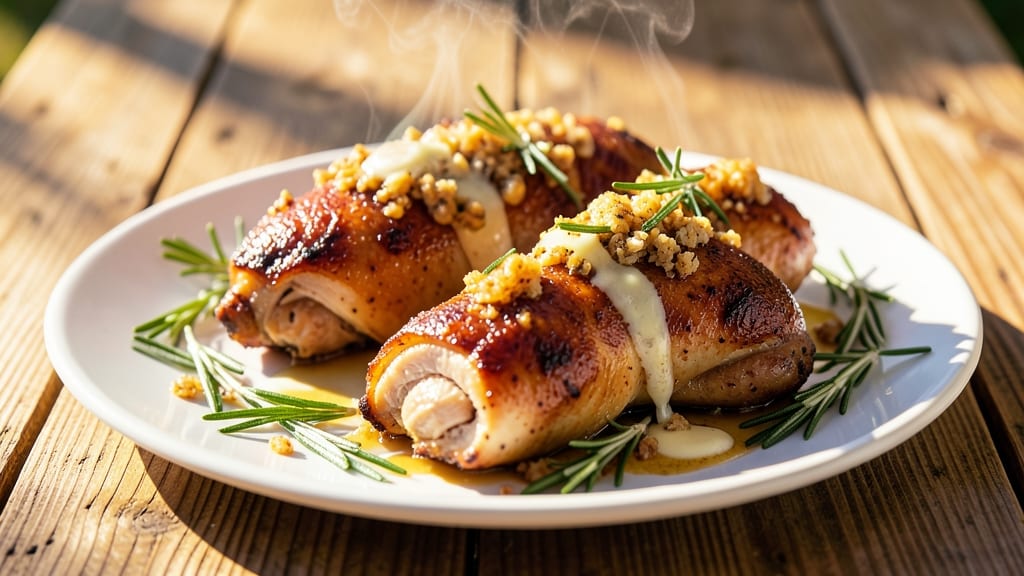
This McCormick-seasoned chicken recipe delivers juicy, restaurant-worthy results with minimal effort—perfect for weeknight dinners or Sunday family meals. 💫 After years of perfecting roast chicken techniques (including my grandmother’s Sunday tradition), I’ve adapted this method to use McCormick’s herb blends for bold, consistent flavor without the guesswork.
The secret lies in a herbed butter basting technique that keeps the meat moist while building a golden, flavorful crust.
The recipe combines a simple one-pan approach with professional results: tender chicken thighs or breasts roasted with garlic, herbs, and butter, then basted until the skin turns crisp and the meat stays fork-tender.
I’ve tested this with both bone-in and boneless cuts—bone-in stays juicier longer, but boneless cooks faster for busy nights. Pair it with roasted potatoes or seasonal vegetables for a complete meal in under 45 minutes.
What you’ll end up with is chicken so flavorful and moist that even picky eaters ask for seconds. The herbed butter creates a rich, aromatic crust, while the McCormick seasoning adds depth without overpowering the natural taste of the chicken.
This is the kind of dish that transforms a simple weeknight into a memorable meal—no fancy techniques required.
For extra versatility, leftovers reheat beautifully for sandwiches or salads. Let’s get started with the full recipe, including step-by-step basting instructions and side pairings that complement the herbed flavors perfectly.
Ingredients for mccormick chicken
Herbed butter basting transforms simple chicken into restaurant-quality perfection with minimal effort.
| Ingredient | Amount | Notes |
|---|---|---|
| Chicken Thighs (bone-in, skin-on) 🍗 | 1 ½ lb | Evenly sized for consistent cooking |
| Chicken Breasts (bone-in, skin-on) 🍗 | 1 ½ lb | Alternative to thighs, pounded even |
| Unsalted Butter 🧈 | ½ cup | Cold, cubed for herbed butter |
| McCormick Garlic Herb Seasoning 🌿 | 2 tbsp | Standard blend for balanced flavor |
| Garlic Cloves 🧄 | 4 cloves | Fresh, minced for herbed butter |
| Fresh Rosemary 🌿 | 1 tbsp | Chopped finely, for herbed butter |
| Fresh Thyme 🌿 | 1 tbsp | Leaves only, for herbed butter |
| Extra-Virgin Olive Oil 🫒 | 1 tbsp | For pan coating, high smoke point |
| Diamond Crystal Kosher Salt 🧂 | 1 tsp | For seasoning, not basting |
| Freshly Ground Black Pepper 🌶️ | ½ tsp | Cracked over chicken before roasting |
| Lemon Juice 🍋 | 1 tbsp | Freshly squeezed, for brightness |
| Yellow Onion 🧅 | 1 whole | Quartered, for pan aromatics |
The chicken cut matters most here—bone-in thighs stay juicier longer, but boneless breasts cook faster for weeknight convenience. McCormick's Garlic Herb Seasoning provides consistent flavor without guesswork, though I always boost it with fresh rosemary and thyme for depth. For the herbed butter, use European-style unsalted butter (like Plugrá) if available—it has higher fat content for richer flavor. The garlic should be freshly minced, not jarred, to avoid bitterness. If you prefer thighs, trim excess fat to prevent flare-ups during roasting. For breasts, pound to even thickness—¼-inch—for uniform cooking. Both cuts should be at room temperature before roasting for even doneness.
No fresh herbs? Dried rosemary and thyme at one-third the amount work in a pinch, though texture suffers. Substituting McCormick's Chicken Herb Seasoning for the garlic herb blend adds a slightly different profile—more thyme, less garlic. For extra richness, swap half the butter for duck fat or ghee, which browns beautifully. The lemon juice can be omitted if you dislike acidity, but it balances the herbed butter's richness. If using bone-in chicken, roast skin-side down first to render fat, then baste frequently to crisp the skin. For boneless cuts, reduce oven temperature to 375°F to prevent drying. The onion adds depth to the pan juices—don't skip it, even if you're not serving it as a side.
Chicken reheats best at 350°F for 10-15 minutes, covered loosely with foil to retain moisture. Store leftovers in the fridge for 3-4 days, or freeze for up to 3 months—portion into airtight containers with a thin layer of herbed butter on top to preserve flavor. The herbed butter basting creates a flavorful crust that reheats beautifully, making this perfect for meal prep. For extra crispiness, broil chicken for 2-3 minutes before serving. The pan drippings can be strained and reduced with a splash of broth for a quick pan sauce—simply whisk in 1 tbsp cornstarch and simmer until thickened.
Why You'll Love This Recipe
- One-Pan Magic: I swear by this for nights when I’m too tired to scrub a million dishes—just toss the chicken, butter, and seasoning on a sheet pan, roast, and walk away. That’s it. The garlic butter pools at the bottom while the chicken crisps up, and honestly? The cleanup is criminally easy.
- Crispy-Creamy Payoff: Skin-on chicken is a game-changer here—you get that golden, shatteringly crisp skin while the inside stays juicy as can be. The McCormick seasoning does the heavy lifting, so you don’t have to fuss with fresh herbs or complicated spice blends.
- Leftovers That Don’t Suck: Between us, most chicken leftovers are sad. Not this. The flavor actually deepens overnight, so it’s perfect for lunchboxes or a quick reheat. I’ll often slice it thin for sandwiches or toss it into salads—no one complains, and that’s a win.
- Budget-Friendly Protein: Bone-in, skin-on pieces stretch further than boneless breasts, and the seasoning is a pantry staple. You’re getting restaurant-quality flavor without the markup—plus, the butter makes it feel special even if you’re feeding a crowd on a tight budget.
Step-by-step instructions for herbed butter roast chicken
This method guarantees perfectly juicy, flavorful chicken with crisp edges every time.
👨🍳 Step 1: Prepare the Herbed Butter Compound
In a small mixing bowl, combine the 0.5 cup unsalted butter with the 2 tbsp McCormick garlic herb seasoning, 4 cloves minced garlic cloves, 1 tbsp finely chopped fresh rosemary, and 1 tbsp fresh thyme leaves. Mix thoroughly until fully incorporated and the butter takes on a vibrant green hue from the herbs.
Press the herbed butter mixture into a log shape and flatten slightly to create an even surface. Chill in the refrigerator for 15 minutes while you prepare the chicken. This ensures the butter stays firm enough to create a flavorful crust without melting prematurely.
🔪 Step 2: Season and Pound the Chicken Breasts
Place the 1.5 lb chicken breasts (bone-in, skin-on) between two sheets of plastic wrap. Using a meat mallet, pound them to an even ½-inch thickness—this prevents uneven cooking and ensures juicy results. Pat the breasts completely dry with paper towels, removing all moisture from the surface.
Season both sides generously with 1 tsp diamond crystal kosher salt and 0.5 tsp freshly ground black pepper. Gently press the chilled herbed butter log onto each breast, covering the entire surface. Secure with toothpicks if needed, then refrigerate uncovered for 30 minutes to allow the seasoning to penetrate.
🔥 Step 3: Roast the Chicken to Juicy Perfection
Preheat your oven to 425°F with a rack positioned in the lower third. Place the seasoned chicken breasts and 1.5 lb chicken thighs (bone-in, skin-on) skin-side up on a wire rack set inside a rimmed baking sheet. This allows hot air to circulate freely, creating crisp skin while keeping the meat moist.
Roast for 25-30 minutes until the internal temperature reaches 165°F at the thickest part of the breast and 175°F for the thighs. The skin should be deep golden brown with crisp edges, while the meat remains tender. For extra crispiness, broil for 2-3 minutes at the end, watching closely to prevent burning.
🥘 Step 4: Sauté Onion Aromatics for Pan Sauce
While the chicken rests, heat 1 tbsp extra-virgin olive oil in a skillet over medium heat. Add the 1 whole yellow onion, quartered, and cook for 8-10 minutes until golden brown and caramelized. Deglaze the pan with 1 tbsp lemon juice, scraping up any browned bits to create a rich, flavorful base.
Return the chicken to the skillet, basting with the onion-lemon sauce. Let it sit for 2 minutes to absorb the aromatics, then transfer to a serving platter. The residual heat will keep the chicken warm while maintaining its juiciness.
Pro Tips For Making Mccormick Chicken
- Pat Skin First: Slap the chicken thighs and breasts skin-side down on a plate, rub the skin with a paper towel until it’s dry as a bone—this helps the seasoning stick and the skin crisp up. I used to skip this, and my butter would just slide off instead of forming that golden crust.
- Sear in Batches: Don’t overcrowd the pan—cook the chicken in two batches if needed. Rushing this step means steaming instead of searing, and your garlic herb butter won’t get that rich, nutty flavor it deserves. A busy pan is a sad pan.
- Smash Garlic Cloves: Instead of mincing, smash the garlic cloves flat with the side of your knife before adding them to the butter—this releases more flavor without burning. I learned this the hard way after tasting bland butter in my first batch.
- Rest Before Serving: Let the chicken sit under foil for 5-10 minutes after cooking—this keeps the juices inside instead of pooling on the plate. I know, I know, you’re hungry now, but trust me, it makes all the difference when you cut into it.
Common mistakes when making perfect results
Overcrowding the Pan
If you stack chicken pieces too closely on the baking sheet, they’ll steam instead of crisp up.
I’ve learned this the hard way—once I crammed thighs and breasts together, and they ended up soggy. 🥵 Use a wire rack over a rimmed baking sheet to maximize airflow, and leave at least ½ inch between pieces.
For extra crispiness, roast skin-side down first to render fat, then flip and baste.
Skipping the Room Temp Step
Cold chicken takes longer to cook evenly, leading to dry edges while the center stays undercooked. Always let chicken sit at room temperature for 30 minutes before roasting. I test this by touching the thickest part—it should feel slightly cool, not icy. This simple step ensures juicy results every time.
Basting Too Early
Opening the oven door too soon disrupts heat circulation and causes temperature fluctuations. Wait until 15 minutes into roasting before basting—this gives the skin time to render fat and develop a golden crust.
I use a baster or spoon to spread pan juices, but avoid overdoing it to prevent soggy skin.
Using Wrong Butter Temperature
Cold butter creates a flavorful crust, but if it’s too soft, it’ll melt into the chicken instead of crisping. Chill your herbed butter log for 15 minutes before pressing it onto the chicken.
For extra insurance, I pop it in the freezer for 5 minutes—this keeps it firm enough to stick and brown beautifully.
Ignoring Resting Time
Cutting into chicken immediately after roasting causes juices to spill out, leaving you with dry meat. Let chicken rest for 5-10 minutes before carving. I cover it loosely with foil to retain heat while the juices redistribute—this simple step makes all the difference in moisture and tenderness.
Overlooking Pan Drippings
The flavorful pan juices are too good to waste! After roasting, scrape up all the browned bits and deglaze with 1 tbsp lemon juice. Simmer for 2 minutes to create a quick pan sauce—it’s perfect for drizzling over the chicken or serving alongside roasted vegetables.
I’ve learned to never throw away these precious drippings! 💫
Nutrition facts
Frequently asked questions
Can I use McCormick seasoning on other proteins besides chicken?
The same herbed butter technique works beautifully with turkey, pork chops, or even salmon fillets! For turkey, reduce roasting time by 10-15 minutes since it cooks faster than chicken. With salmon, skip the high heat and bake at 375°F for 12-15 minutes to avoid overcooking. The McCormick seasoning adds great depth to all these proteins.
How do I adjust this recipe for a larger group?
Double the ingredients and use two baking sheets to maintain even cooking. For 8 servings, roast two 2.5 lb chickens at 400°F for 40-45 minutes, basting every 10 minutes. Use a meat thermometer to check doneness—165°F for breasts and 175°F for thighs. Preheat your oven longer (20-30 minutes) to maintain consistent temperature.
What's the best way to reheat leftovers?
Reheat in a 350°F oven for 10-15 minutes, covered loosely with foil to trap moisture. For microwave reheating, use 50% power for 1-2 minutes with a damp paper towel over the chicken. Never microwave uncovered—it dries out the meat. The herbed butter crust reheats beautifully when warmed gently.
Can I substitute McCormick seasoning with other blends?
Try McCormick's Chicken Herb Seasoning for a slightly different flavor profile (more thyme), or make your own by mixing 1 tsp dried thyme, 1 tsp dried rosemary, 1 tsp garlic powder, and ½ tsp onion powder. For Italian flavors, use Italian seasoning with extra garlic. Always adjust salt to taste—some blends contain more salt than others.
Why did my chicken turn out dry?
Overcooking is the most common cause—chicken is done at 165°F for breasts and 175°F for thighs. Skipping the resting time or cutting into it too soon also causes moisture loss. Use a meat thermometer for accuracy, and always let chicken rest 5-10 minutes before serving. For extra juiciness, baste frequently with melted herbed butter during roasting.