
Main Courses
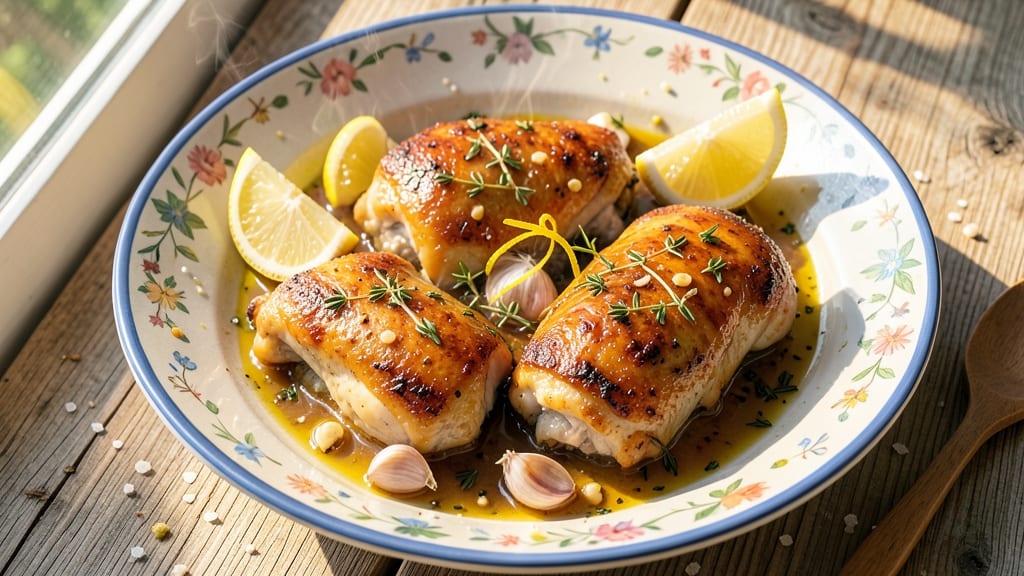
This authentic Greek lemon chicken recipe brings the flavors of a Greek taverna straight to your kitchen, where bright citrus and aromatic herbs transform simple chicken into something extraordinary.
The secret lies in marinating the chicken overnight in a blend of fresh lemon juice, minced garlic, and fragrant oregano—this isn’t just flavor, it’s a tradition.
What sets this dish apart is the crispy, golden skin achieved through a high-heat sear, followed by a gentle bake that keeps the meat tender and juicy.
The magic happens in the marinade, where the acidity of fresh lemon tenderizes the chicken while infusing it with a vibrant, zesty character that’s distinctly Greek.
No shortcuts here—this recipe delivers restaurant-quality results with just a few key ingredients: quality chicken thighs (for crispy skin), extra-virgin olive oil, and a handful of fresh herbs. The technique is straightforward, but the flavors are anything but ordinary.
By the time you serve this dish, you’ll have perfectly crispy skin that shatters with each bite, tender meat infused with bright citrus and earthy oregano, and a plate that looks as impressive as it tastes.
The aroma alone will have everyone gathering at the table, and the first bite will confirm why this recipe has been a staple in Greek homes for generations.
Serve with a side of roasted potatoes or a fresh Greek salad to complete the meal—this chicken stands up to bold flavors and pairs beautifully with traditional accompaniments. The best part?
This method works equally well on the grill or in the oven, making it perfect for any home cook looking to bring a taste of Greece to their dinner table.
Ingredients for authentic greek lemon chicken
Quality chicken thighs, bright citrus, and aromatic herbs create this restaurant-worthy Greek dish.
| Ingredient | Amount | Notes |
|---|---|---|
| Chicken Thighs, Bone-In, Skin-On 🍗 | 1 ½ lb | Skin left intact for crispiness |
| Extra-Virgin Olive Oil 🫒 | ¼ cup | For high-heat searing |
| Fresh Lemon Juice 🍋 | ½ cup | From 2-3 medium lemons |
| Garlic Cloves 🧄 | 6 cloves | Minced for marinade |
| Fresh Oregano 🌿 | ¼ cup | Chopped, not dried |
| Dried Oregano 🌿 | 1 tsp | For backup if fresh unavailable |
| Kosher Salt 🧂 | 2 tsp | Diamond Crystal preferred |
| Ground Black Pepper 🌶️ | 1 tsp | Freshly cracked |
| Honey 🍯 | 1 tbsp | For glaze balance |
| Fresh Dill 🌿 | ⅛ cup | Chopped, optional garnish |
| Fresh Parsley 🌿 | ⅛ cup | Chopped, optional garnish |
| Red Wine Vinegar 💧 | 1 tbsp | For marinade acidity |
The chicken thighs are non-negotiable—bone-in, skin-on delivers that signature crispy skin. Look for thighs with good marbling at your local butcher or the meat department. Whole Foods or Trader Joe's usually carry high-quality cuts. Fresh oregano is ideal, but if you're using dried, measure it at one-third the amount of fresh. The olive oil should be extra-virgin and fruity—California Olive Ranch is a reliable brand. For the lemon juice, use freshly squeezed—bottled juice lacks the vibrant acidity needed for authentic flavor. The honey should be raw and unfiltered for the best texture and flavor profile.
No fresh oregano? Dried works at one-third the amount, but it won’t have the same depth. Substitute thyme if you’re out of oregano, but reduce to half the amount. Running low on lemon juice? Lime juice works in a pinch, but the flavor will be slightly different. The red wine vinegar can be swapped for white wine vinegar if needed. For the honey glaze, agave nectar is a vegan alternative, but it won’t caramelize the same way. If you’re grilling instead of baking, reduce the olive oil slightly to avoid flare-ups. The garlic can be pre-minced from a jar, but fresh is always better if you’ve got it.
Marinate the chicken overnight for maximum flavor infusion. Store the marinade in a glass container in the fridge. The chicken keeps raw in the marinade for up to 24 hours. Once cooked, the dish reheats beautifully—cover with foil and warm in the oven at 350°F for 10-15 minutes. For leftovers, store in an airtight container for up to 3 days. The crispy skin is best eaten fresh, but the tender meat stays delicious for 2-3 days. Freeze cooked chicken for up to 3 months—thaw overnight in the fridge before reheating.
Why You'll Love This Recipe
- Skin-On Magic: The bone-in, skin-on thighs crisp up like a dream—golden and shatteringly crisp—while staying juicy inside. Honestly, that contrast is what makes it worth every second in the oven.
- Garlic-Lemon Zing: Fresh oregano and minced garlic sizzle in olive oil until fragrant, then that bright lemon juice cuts through the richness like a Greek summer breeze. It’s the kind of flavor that makes you reach for seconds without thinking.
- Weeknight & Meal Prep: Throw it together while you’re waiting for the pasta to boil—no fancy steps, just season, sear, and bake. Leftovers? Even better. The skin stays crispy when reheated (yes, really), and it’s the star of lunchboxes or quick dinners.
- Budget-Friendly Feast: Bone-in thighs stretch your dollar without sacrificing taste, and the ingredients? Most are pantry staples or cheap at the market. Between us, this is the recipe I make when I need to feed a crowd but still want to feel like I’m cooking something special.
Step-by-step instructions for authentic Greek lemon chicken
Here's how to create restaurant-quality Greek lemon chicken with perfectly crisp skin and vibrant citrus flavors.
Prepare the Citrus Marinade
In a mixing bowl, combine the 0.5 cup fresh lemon juice, 1 tbsp red wine vinegar, 1 tbsp honey, 6 minced garlic cloves, 0.25 cup chopped fresh oregano, and 2 tsp kosher salt. Whisk vigorously until the honey dissolves completely and the mixture becomes fragrant. This marinade is the heart of the dish—its bright acidity tenderizes the chicken while infusing it with authentic Greek flavors.
Add 1 tsp ground black pepper and mix again. The pepper's warmth will complement the citrus perfectly. Taste the marinade—it should be tangy, slightly sweet, and aromatic. If you prefer a stronger flavor, you can add the 1 tsp dried oregano now, though the fresh oregano provides the most authentic taste.
Marinate the Chicken
Place the 1.5 lb chicken thighs, skin-side up, in a shallow dish or resealable bag. Pour the marinade over the chicken, ensuring it coats all surfaces, including the skin. The skin should glisten slightly—this indicates proper saturation. Let the chicken marinate in the refrigerator for at least 2 hours, or ideally overnight for maximum flavor penetration.
Here's the thing—don't skip this step. The marinade doesn't just add flavor; it breaks down the muscle fibers slightly, ensuring the chicken remains juicy even with the crispy skin. If you're short on time, marinate for at least 1 hour, but understand that shorter marinating means slightly less tender meat.
Sear for Crispy Skin
Remove the chicken from the marinade (reserve the marinade for later) and pat it dry thoroughly with paper towels. This drying step is critical—it ensures the skin becomes crispy rather than steamed. Heat 0.25 cup extra-virgin olive oil in a large oven-safe skillet over medium-high heat until it shimmers but doesn't smoke.
Place the chicken thighs in the skillet, skin-side down. Press gently on each thigh with a spatula to help the skin make full contact with the oil. Cook undisturbed for 6-8 minutes until the skin is deep golden brown and crispy. You'll know it's ready when the skin releases easily from the pan. Flip the chicken and sear the other side for 4-5 minutes until golden.
Finish in the Oven
Transfer the skillet to a 400°F preheated oven. Pour the reserved marinade into the skillet, coating the chicken completely. The marinade will bubble and reduce slightly as it cooks, creating a glossy glaze. Bake for 15-20 minutes, or until the internal temperature reaches 165°F when measured at the thickest part of the thigh.
During this time, the chicken will finish cooking while the marinade caramelizes into a sticky, flavorful sauce. The oven ensures the chicken cooks through evenly without losing its crispy skin. Watch for the skin to become even more golden—this is your signal that the chicken is nearly done.
Rest and Garnish
Remove the chicken from the oven and let it rest for 5-10 minutes before serving. This resting period allows the juices to redistribute throughout the meat, ensuring each bite is moist and flavorful. While the chicken rests, spoon the pan sauce over the top, basting the chicken generously.
Garnish with 0.125 cup chopped fresh dill and 0.125 cup chopped fresh parsley just before serving. These herbs add a fresh, vibrant finish that complements the citrus and garlic flavors. Serve immediately with crusty bread or over a bed of roasted vegetables to complete this authentic Greek dish.
Pro Tips For Making Authentic Greek Lemon Chicken
- CRISP THE SKIN FIRST: I learned this the hard way—skip searing the chicken thighs skin-side down until they’re golden before adding lemon and garlic, and you’ll end up with soggy, flavorless skin. Get a hot pan screaming (medium-high heat) and lay those thighs skin-down for 8-10 minutes until the fat renders and the skin turns deep amber. That’s where the real flavor hides.
- ZEST THE LEMON: Fresh lemon juice is non-negotiable, but don’t ignore the zest. After juicing, rub the tough outer peel over the chicken while it rests—it adds a bright, citrusy aroma that cuts through the richness of the olive oil. (Yes, even if you’re impatient like me, take the 30 seconds to do it.)
- DON’T OVERCROWD THE PAN: I was skeptical until I tried it: Cook the thighs in a single layer, skin-side down, with space between them. If you pile them on, they’ll steam instead of brown, and the garlic will burn before the chicken cooks. A 12-inch skillet works best—no need for a giant Dutch oven here.
- SALT THE GARLIC: Here’s the thing that matters most: Before smashing those garlic cloves into the pan, sprinkle a pinch of salt over them. It keeps them from sticking to the chicken and burns less easily. My grandmother swore by this, and she was right—it makes a real difference in the final bite.
Common mistakes when making perfect results
Skipping the Marinade
This is the biggest mistake you can make—never skip marinating the chicken, even if you're short on time. The acid in the lemon juice and vinegar tenderizes the meat while infusing it with authentic Greek flavors.
If you're rushed, marinate for at least 1 hour, but understand the meat won't be as tender. I've learned the hard way that dry, flavorless chicken is no substitute for properly marinated chicken. 🍋
Not Drying the Skin
Wet skin = steamed skin, not crispy skin. After marinating, pat the chicken completely dry with paper towels before searing. Any moisture left on the skin will prevent it from crisping up properly.
I once forgot this step and ended up with soggy skin—not the crispy, golden texture we're aiming for. Use two layers of paper towels for best results.
Overcrowding the Pan
Don't try to cook all the chicken at once in the same pan. Overcrowding lowers the pan's temperature, leading to steamed instead of seared skin. Cook the thighs in batches if needed, but maintain that medium-high heat for crispy results.
I've made this mistake when cooking for a crowd—always work in batches for perfect skin every time. 🔥
Ignoring the Resting Time
Skipping the 5-10 minute rest after cooking might seem harmless, but it causes juices to spill out when you cut into the chicken. This resting period is crucial for keeping the meat juicy and flavorful.
I've seen people cut into chicken immediately and end up with dry, flavorless bites—don't be that person. Use this time to make your final sauce or set the table.
Using Bottled Lemon Juice
Freshly squeezed lemon juice makes all the difference in authentic Greek flavors. Bottled juice lacks the vibrant acidity and complexity needed for this dish. If you must use bottled, look for 100% pure lemon juice with no added water or preservatives.
I've tried the shortcut—it's not worth it. The first time I used fresh lemon juice, I noticed an immediate difference in brightness and depth of flavor. 💛
Incorrect Temperature Control
Cooking at too low a temperature will result in dry, overcooked chicken, while too high a heat can burn the skin before the meat is done. Maintain medium-high heat for searing and 400°F for baking.
Use a meat thermometer to check for an internal temperature of 165°F—this ensures perfectly cooked chicken every time. I've ruined chicken by guessing temperatures, so always use a thermometer for accuracy. 🌡️
Nutrition facts
Frequently asked questions
Can I use chicken breasts instead of thighs for this recipe?
Chicken breasts won't give you the same crispy skin, but you can still make them work! Use bone-in, skin-on breasts and pat them very dry before cooking. The thighs are preferred because their higher fat content creates that signature crispy texture, but breasts will work if you're careful with the drying and searing steps.
How do I adjust this recipe for a larger group?
Double or triple the marinade and chicken portions, but cook in batches to maintain crispy skin. Use two skillets or work in stages—overcrowding will turn your crispy skin into steamed skin. The marinade can be made ahead and stored in the fridge for up to 2 days before using.
What's the best way to reheat leftovers?
Reheat in a 350°F oven for 10-15 minutes covered with foil to prevent drying. For extra crispiness, broil for the last 2 minutes (watch closely!). Microwaving will make the skin rubbery—avoid it if you want that authentic restaurant texture.
Can I make this on the grill instead of the oven?
Grill over medium-high heat for 4-5 minutes per side until golden, then finish with the marinade in a foil packet for 10 minutes off the heat. The grill adds a smoky depth that works beautifully with the citrus flavors. Just be careful not to overcook the chicken.
What herbs can I substitute if I don't have fresh oregano?
Use dried oregano (1/3 the amount) or thyme as a substitute. For extra flavor, combine half the amount of dried oregano with 1/4 cup chopped rosemary. The key is balancing the earthy notes—don't overdo it, or the citrus flavors will get lost.