
Main Courses
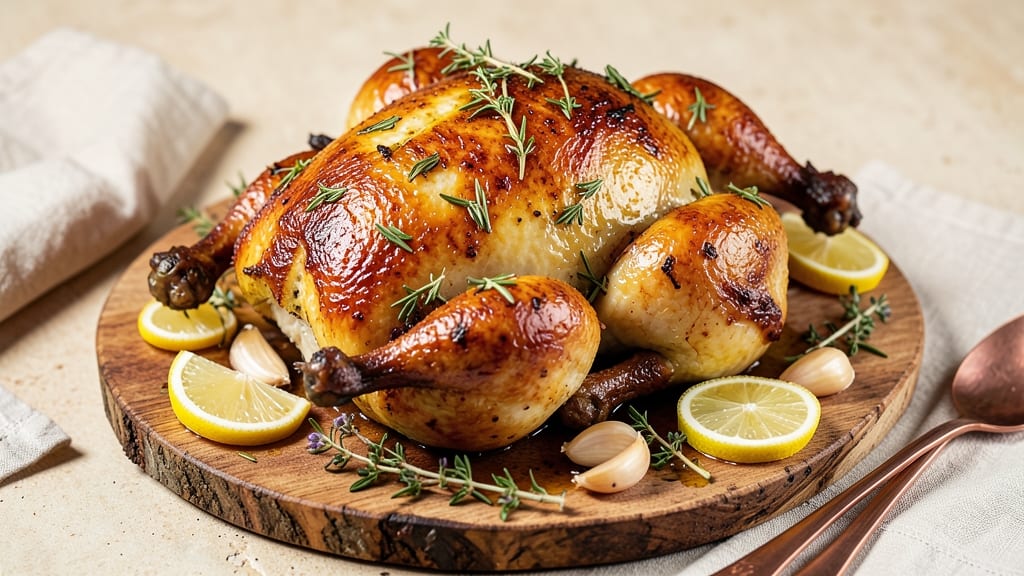
This authentic Greek roasted chicken recipe brings the flavors of a Greek island straight to your kitchen table—crisp golden skin, fragrant lemon-oregano aroma, and succulent meat that falls apart with every bite. 🌟 The secret lies in a simple yet transformative marinade of olive oil, fresh herbs, and bright lemon juice, which infuses the chicken with Mediterranean warmth while keeping it juicy and tender.
What sets this recipe apart is the traditional technique of roasting at high heat, basting with its own juices, and finishing with a crispy skin that’s impossible to resist. Unlike heavy, buttery roasts, this chicken stays light and flavorful, thanks to the fresh herbs and citrus.
The result? A dish that tastes like it came from a Greek taverna, not your backyard.
By the time you pull this chicken from the oven, you’ll have a centerpiece that’s juicy inside and crisp outside, ready to be served with lemon wedges, warm pita bread, and a simple Greek salad.
Every bite delivers layers of oregano, thyme, and lemon—bright, aromatic, and deeply satisfying. This is the kind of meal that makes your kitchen smell like summer in Greece.
The best part? This recipe is foolproof for home cooks, with clear steps for marinating, roasting, and basting—no fancy techniques required. Whether you’re hosting a dinner or simply craving a taste of Greece, this method guarantees restaurant-quality results with minimal effort. Let’s get started!
Ingredients for authentic greek roasted chicken
Fresh herbs, bright citrus, and a whole chicken—simple ingredients for a dish that tastes like summer in Greece.
| Ingredient | Amount | Notes |
|---|---|---|
| Whole Chicken 🍗 | 4 lb | Fresh, preferably free-range |
| Extra-Virgin Olive Oil 🫒 | ½ cup | High quality, fruity variety |
| Fresh Lemon Juice 🍋 | ¼ cup | From 2-3 fresh lemons |
| Fresh Oregano Leaves 🌿 | ¼ cup | Packed, stems removed |
| Fresh Thyme Sprigs 🌿 | ¼ cup | Stems removed, leaves only |
| Garlic Cloves 🧄 | 6 cloves | Peeled, roughly chopped |
| Salt 🧂 | 2 tsp | Diamond Crystal kosher salt |
| Ground Black Pepper 🌶️ | 1 tsp | Freshly ground preferred |
| Fresh Rosemary Sprigs 🌿 | ⅛ cup | Stems removed, leaves only |
| Lemon Zest 🍋 | 1 tbsp | From 1 lemon, finely grated |
| Honey 🍯 | 2 tsp | For crispy skin (optional) |
The chicken is everything here. Whole birds are ideal—they stay juicier than cut-up pieces, and the skin crisps beautifully. Look for free-range or organic if you can find it at Whole Foods or your local butcher. A 4-pound bird serves 4 comfortably with sides, but if you're feeding a crowd, scale up. The key is to let the bird sit at room temp for 30 minutes before roasting—this ensures even cooking. Don't skip this step, even if you're in a hurry. For the herbs, fresh is non-negotiable. Dried oregano and thyme won't give you that authentic Greek taverna flavor, so grab a bunch from the grocery store's produce section or a farmers market.
No fresh oregano? Dried works in a pinch, but use half the amount—it's way more concentrated. Short on thyme? Fresh marjoram or even more oregano will bridge the gap. The honey is optional but worth it for that caramelized crust. If you're avoiding sugar, skip it or use a tiny bit of maple syrup instead. For the olive oil, any good-quality extra-virgin will do—just make sure it's actually olive oil and not that cheap canola oil disguised as 'olive oil blend'. The lemon juice should be freshly squeezed; bottled won't cut it. And if you're feeling fancy, add a splash of ouzo or white wine to the marinade for extra depth, but it's not required.
This chicken tastes even better the next day, so make extra if you're planning leftovers. Store it in the fridge for up to 3 days, wrapped tightly in foil to keep it moist. For longer storage, freeze portions for up to 3 months. The best part? The leftovers reheat beautifully—just pop them in a skillet with a splash of water or olive oil to revive that crispy skin. If you're prepping ahead, marinate the chicken overnight in the fridge for maximum flavor infusion. Just remember to bring it to room temp before roasting, or it'll take forever to cook through.
Why You'll Love This Recipe
- One-Pan Magic: I swear by this—just rub the chicken with olive oil, lemon, and herbs, then let the oven do the work. No chopping, no fuss, no extra dishes beyond the pan you already pulled out.
- Sunshine in Every Bite: That bright lemon juice cutting through the rich olive oil? It’s the kind of flavor that makes you pause mid-bite. The oregano and thyme tie it all together—simple, but ridiculously good.
- Weeknight to Dinner Party: Serve it with crusty bread and a Greek salad for a lazy night, or carve it up for guests and call it effortless elegance. Same recipe, two totally different vibes.
- Leftovers That Don’t Suck: The crispy skin stays crispy cold, and the meat shreds perfectly for souvlaki the next day. Honestly, I make this on purpose just to have leftovers I’ll actually eat.
Step-by-step instructions for authentic Greek roasted chicken
Here's how to make restaurant-quality Greek roasted chicken with crispy skin and juicy meat.
👨🍳 Step 1: Prep the Chicken with Herbs and Lemon
Remove the chicken from the fridge and let it sit at room temperature for 30 minutes—this ensures even cooking. Pat it completely dry inside and out with paper towels. Moisture is the enemy of crispy skin, so don't skip this step.
In a small bowl, mix together the 0.5 cup extra-virgin olive oil, 0.25 cup fresh lemon juice, 1 tbsp lemon zest, 2 tsp honey, 2 tsp salt, 1 tsp ground black pepper, and the 0.25 cup fresh oregano leaves, 0.25 cup fresh thyme sprigs, and 0.125 cup fresh rosemary sprigs. Rub this mixture all over the chicken, including inside the cavity. Stuff the cavity with half of the 6 cloves garlic cloves and the remaining herbs.
Here's the thing—Greek cooks use plenty of fresh herbs for that bright, aromatic flavor. Don't be shy with the amounts. Let the chicken sit uncovered in the fridge for at least 1 hour (or up to 24 hours) to let the flavors penetrate deeply.
🍳 Step 2: Sear the Chicken for Maximum Flavor
Preheat your oven to 425°F with a rack positioned in the lower third of the oven. Place a roasting rack in a rimmed baking sheet—this allows air to circulate underneath for crispier skin.
Heat a large oven-safe skillet over medium-high heat. Add the chicken breast-side down and sear for 5-6 minutes until the skin is golden brown and crispy in spots. Flip the chicken and sear the other side for another 5-6 minutes. The skin should release easily from the pan when ready.
Real talk: If the chicken starts to smoke, lower the heat slightly. You want golden, not blackened. The searing step locks in juices and creates that beautiful crust we're after.
🔥 Step 3: Roast Until Juicy Perfection
Transfer the skillet to the preheated oven and roast for 45-50 minutes for a 4 lb chicken. You're looking for an internal temperature of 165°F in the thickest part of the thigh. The skin should be deep golden brown and crispy, with juices running clear when you pierce it.
Don't open the oven during cooking—every time you peek, you lose heat and steam the skin instead of crisping it. If you're worried about doneness, use a meat thermometer. The chicken will carry over 5°F once it rests, so pull it out when it hits 160°F.
Here's where the magic happens: The combination of high heat and the herb-oil mixture creates that signature Greek roasted flavor. The lemon keeps the meat tender while the honey adds just enough caramelization for that perfect crisp.
⏰ Step 4: Rest and Serve with Confidence
Remove the chicken from the oven and transfer it to a cutting board. Tent loosely with foil and let it rest for 15-20 minutes. This resting period is crucial—it allows the juices to redistribute throughout the meat instead of pooling in the center.
While it rests, spoon the pan juices over the chicken to baste it. The flavors will meld beautifully during this time. Carve the chicken against the grain for tender slices. Each bite should deliver crispy, herby skin with juicy, flavorful meat underneath.
Serve with lemon wedges on the side—Greeks love squeezing fresh lemon over their roasted chicken right before eating. The bright acidity cuts through the richness and keeps everything fresh.
Pro Tips For Making Authentic Greek Roasted Chicken
- CRANK THE HEAT FIRST: Start your chicken on the hottest rack in the oven—425°F (220°C)—for the first 20 minutes. I learned this the hard way: low-and-slow roasting makes for pale, bland skin. The initial blast of heat renders fat fast and kickstarts that golden crust you crave. After that, drop to 375°F (190°C) for even cooking.
- DRY THE CHICKEN LIKE MAD: Pat that bird thoroughly with paper towels—inside and out—before oiling. Wet skin won’t crisp, no matter how much olive oil you drizzle. I used to skip this, and my chicken always came out soggy. Take the extra 5 minutes; your future self will notice the difference.
- STUFF THE CAVITY WITH LEMON: Halve a lemon, squeeze the juice into the cavity, then stuff the halves inside along with thyme sprigs. The acid keeps the meat juicy, and the lemon’s oils infuse the flesh as it roasts. (Yes, even if you’re impatient like me—this isn’t optional.)
- SALT THE CHICKEN 12 HOURS EARLY: Season the whole chicken inside and out with kosher salt at least a day ahead. This seasons the meat deeply and draws out moisture, so it crisps perfectly. I was skeptical until I tried it—now I never skip it. Use about 1 teaspoon salt per pound, and don’t rinse it off before roasting.
Regional styles of authentic greek roasted chicken
Island-Style Preparation
On the Greek islands, cooks often marinate chicken overnight in a simple blend of olive oil, lemon, and fresh herbs like oregano and thyme. The key is using fresh herbs—never dried—because they deliver that bright, aromatic flavor.
I like to stuff the cavity with garlic cloves and extra herbs for maximum flavor infusion. This method mimics what you'd find in a taverna on Santorini or Mykonos, where the chicken sits in the marinade for hours before roasting. 🌿
For an extra touch, some island cooks add a splash of ouzo or white wine to the marinade, which adds depth without overpowering. If you want to try this, add 2 tablespoons of ouzo to the marinade and let it sit for at least 1 hour before using.
The alcohol will cook off, leaving behind a subtle herbal note that's pure Greek island magic.
Peloponnese Crispy Skin
In the Peloponnese region, cooks focus on achieving that signature crispy, golden-brown skin—almost like a thin crackling. The secret? A high-heat sear in the oven after an initial stovetop sear.
Start by searing the chicken in a hot skillet until the skin is golden, then transfer it to a 425°F oven on a rack to allow air circulation. This two-step method ensures the skin crisps perfectly while the meat stays juicy. 🔥
Peloponnese cooks also swear by a honey glaze for extra crispiness. After searing, brush the chicken with a mix of 1 tablespoon honey and 1 tablespoon olive oil before roasting.
The honey caramelizes beautifully, giving the skin that irresistible crunch. Just don’t overdo it—too much honey can make the skin sticky instead of crisp.
Crete's Lemon-Infused Twist
On the island of Crete, lemon isn’t just a garnish—it’s the star. Cretans often marinate chicken in fresh lemon juice and lemon zest, which keeps the meat tender and adds a bright citrus note.
I like to add 1 extra tablespoon of lemon zest to the marinade for this regional touch. The zest brings out the natural flavors of the herbs and olive oil, making every bite taste like a burst of Mediterranean sunshine. 🍋
For an authentic Cretan finish, serve the chicken with lemon wedges on the side. Greeks love squeezing fresh lemon over their roasted chicken right before eating—it cuts through the richness and keeps everything feeling light.
If you're feeling adventurous, add a pinch of red pepper flakes to the marinade for a subtle kick, just like the Cretans do in their summer dishes.
Athens' Herb-Forward Approach
In Athens, the focus is on bold, fresh herbs—especially oregano and rosemary—which give the chicken its signature aroma. Athenian cooks often use double the amount of oregano compared to other regions, packing the cavity with extra sprigs for maximum flavor.
I recommend using 0.3 cup of oregano leaves instead of the standard 0.25 cup to get that authentic Athenian taste. 🌿
Another Athenian trick? Roasting the chicken on a bed of lemon slices in the pan. Place 2-3 thin lemon slices under the chicken before searing—this infuses the meat with citrusy notes and adds a beautiful presentation.
The lemon slices also help keep the chicken moist during roasting, ensuring juicy, tender meat every time.
Nutrition facts
Frequently asked questions
Can I use bone-in, skin-on chicken thighs instead of a whole chicken?
For thighs, increase the roasting time to 50-55 minutes at 425°F until the internal temperature reaches 165°F. Marinate them the same way, but sear skin-side down first for 4-5 minutes to render fat and crisp the skin. The thighs stay juicier longer than breasts, making them a great alternative.
How do I keep the chicken from drying out?
Never skip the resting time—always let it rest 15-20 minutes before carving. Overcrowding the pan also causes steaming, so use a rack and avoid stacking. For extra moisture, add 2-3 lemon slices under the chicken before roasting. The high heat and basting with pan juices ensure crispy skin without dryness.
What's the best way to reheat leftovers?
Reheat skin-side down in a skillet over medium-low heat for 3-4 minutes with a splash of water or olive oil to revive crispiness. Avoid microwaving—it turns the skin rubbery. For whole chicken, wrap tightly in foil and bake at 325°F for 15-20 minutes until warmed through.
Can I make this recipe without fresh herbs?
Use half the amount of dried herbs (e.g., 1.5 tsp dried oregano instead of 0.25 cup fresh), but fresh delivers that authentic taverna flavor. For thyme, dried works better than oregano. If you're missing rosemary, substitute with extra oregano. The lemon and olive oil will still shine through!
Why does my chicken skin turn out pale instead of golden?
Pale skin usually means moisture wasn't removed properly or the oven wasn't hot enough. Always pat the chicken completely dry before seasoning, and use a meat thermometer to confirm 425°F heat. For extra crispiness, sear in a hot skillet first, then transfer to the oven. A wire rack also promotes even browning.