
Main Courses
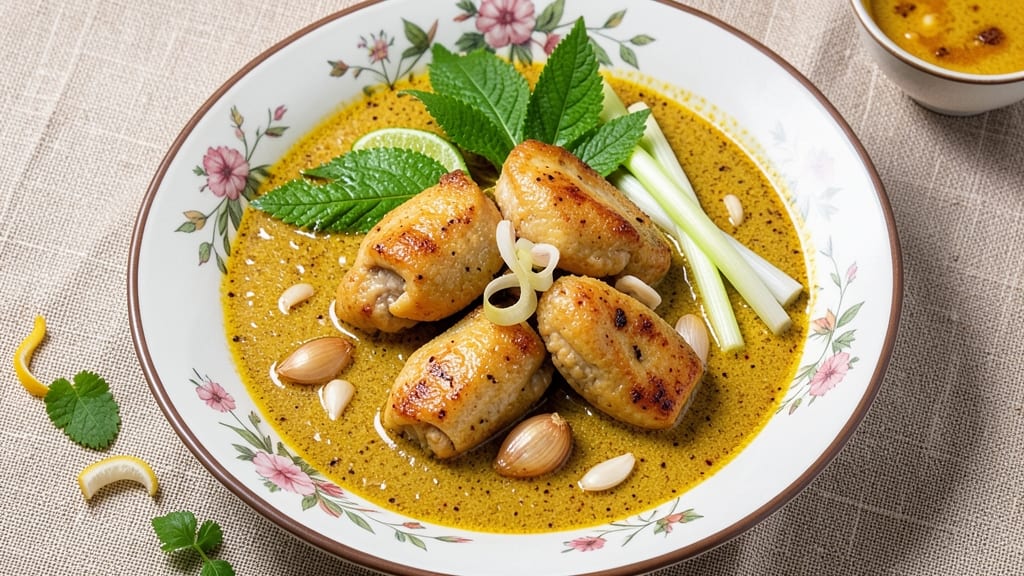
This authentic Thai yellow chicken curry brings the vibrant flavors of Bangkok to your kitchen with its signature turmeric-galangal heat. 🌟 The secret lies in balancing sweet, sour, and spicy elements—just like street vendors in Thailand do—while using fresh galangal and kaffir lime leaves for that unmistakable aroma.
I’ve perfected this one-pot recipe over years of travel and testing, ensuring every bite delivers the complexity of a bustling Thai market.
The curry starts with a fragrant paste of shallots, garlic, lemongrass, and galangal, toasted until aromatic before simmering with coconut milk and chicken. The turmeric gives it that signature golden hue, while fish sauce and palm sugar create the perfect balance of savory and sweet.
No shortcuts here—this is the real deal, with fresh Thai basil and cilantro added at the end for brightness.
By the time you serve it steaming over jasmine rice, you’ll taste the layers of flavor: tender chicken in a velvety, slightly spicy sauce with just the right kick. The galangal adds a citrusy warmth, while the coconut milk keeps it rich without being heavy.
This isn’t just a curry—it’s a taste of Thailand, made simple enough for weeknight dinners.
Pair it with cucumber salad or steamed greens to cut through the richness, and you’ve got a meal that’s as impressive as it is delicious. Let’s get cooking—your taste buds will thank you.
Ingredients for authentic thai yellow chicken curry
Fresh galangal, fragrant lemongrass, and aromatic kaffir lime leaves bring Bangkok's bold flavors to your kitchen.
| Ingredient | Amount | Notes |
|---|---|---|
| Boneless Chicken Thighs 🍗 | 1 ½ lb | Cut into 1-inch pieces |
| Fresh Galangal 🍋 | 3 inches | Peeled, sliced thinly |
| Kaffir Lime Leaves 🍃 | 4 whole | Torn into strips |
| Shallots 🧅 | 6 whole | Finely chopped |
| Garlic Cloves 🧄 | 6 cloves | Minced finely |
| Lemongrass 🌿 | 3 inches | Lower part, sliced |
| Turmeric Powder 🌶️ | 1 tbsp | Freshly ground preferred |
| Coconut Milk 🥥 | 1 can (13.5 oz) | Full-fat for creaminess |
| Fish Sauce 🌊 | 2 tbsp | Red Boat preferred |
| Palm Sugar 🍯 | 2 tbsp | Or substitute brown sugar |
| Thai Basil Leaves 🌿 | ¼ cup | Fresh, packed |
| Cilantro Leaves 🌿 | ¼ cup | Chopped for garnish |
| Vegetable Oil 🫒 | 2 tbsp | For sautéing |
| Salt 🧂 | 1 tsp | Kosher or sea salt |
| Black Pepper 🌶️ | ½ tsp | Freshly ground |
Galangal is the heart of this curry—look for fresh, pale rhizomes at Asian markets (they’re harder to find at regular grocery stores). If you can’t find it, ginger works in a pinch, but it’s not the same. The kaffir lime leaves? Freeze extras—they’ll last months and keep that citrusy aroma. Shallots and garlic should be fresh—no sad, sprouting bulbs here. For the lemongrass, use the lower part of the stalk (the white, fibrous bit) where all the flavor hides. Costco often carries pre-sliced galangal if you’re short on time.
No galangal? Ginger plus a pinch of citric acid (like from a lemon) gets you close. Running low on fish sauce? Soy sauce plus a splash of lime juice works, but it won’t be exactly the same. Palm sugar unavailable? Brown sugar or coconut sugar are fine—just dissolve it first. The Thai basil is non-negotiable for that authentic taste, but if you’re desperate, regular basil plus a pinch of cinnamon helps. For the coconut milk, full-fat is a must—light versions make the curry taste watery. And if you’ve got Thai bird’s eye chilies, toss in a few for heat (start with 1-2).
This curry tastes even better the next day—plan ahead! Store leftovers in an airtight container in the fridge for up to 4 days, or freeze for 3 months. I like to double the recipe and freeze half—perfect for lazy weeknights. The galangal and kaffir lime leaves can be prepped ahead and stored in the freezer for up to 6 months. Just thaw before using. And if you’ve got extra coconut milk, freeze it in ice cube trays for smoothies later.
Why You'll Love This Recipe
- One-Pot Magic: I swear by this recipe—just chop, simmer, and let the galangal and lime leaves work their magic. No extra pots, no fuss, and that golden curry paste does all the heavy lifting while I sip my tea.
- Taste Like a Secret: Between us, the shallots and garlic caramelize into something ridiculously fragrant, while the galangal adds that bright, citrusy kick. It’s the kind of flavor that makes you pause mid-bite, like, "Wait, I’m making this at home?"
- Leftovers That Shine: This curry only gets better the next day—honestly, I make it on Sundays just so I can reheat it all week. The chicken stays juicy, the sauce thickens perfectly, and it’s my go-to for lazy nights when I’d rather not cook.
- Budget-Friendly Luxury: Chicken thighs are forgiving, galangal’s cheap at Asian markets, and a few lime leaves stretch across multiple batches. It’s the kind of dish that feels special but won’t break the bank—especially when you’re feeding a crowd or just treating yourself.
Step-by-step instructions for authentic Thai yellow chicken curry
Let's bring the bold flavors of Thailand to your kitchen with this one-pot masterpiece.
🍳 Step 1: Build the Aromatic Base
Heat the 2 tablespoons vegetable oil in a large pot over medium-high heat. Add the 6 whole shallots and cook for 3-4 minutes until they soften and turn translucent. You'll smell their sweetness intensifying—that's your first flavor cue.
Toss in the 6 cloves garlic cloves and 3 inches lemongrass (just the lower part, sliced). Cook for 1 minute until the garlic becomes fragrant—don't let it brown or it'll turn bitter. Add the 3 inches fresh galangal (peeled and sliced) and stir for 30 seconds to release its citrusy aroma. This aromatic trio forms the heart of your curry's complex flavor profile.
🍳 Step 2: Toast the Spices and Add Chicken
Lower the heat to medium and sprinkle in the 1 tablespoon turmeric powder. Stir constantly for 30 seconds until the powder dissolves and the oil turns a vibrant golden yellow—this is your visual confirmation the turmeric is activated. Add the 1.5 lb boneless chicken thighs (cut into 1-inch pieces) and cook for 5 minutes, stirring occasionally, until they develop a light golden crust.
Here's where it gets aromatic: add the 4 whole kaffir lime leaves (torn into strips) and stir for 1 minute. You'll notice the leaves release their citrusy perfume—they're the secret to that authentic Thai brightness. Sprinkle with 1 teaspoon salt and ½ teaspoon black pepper, rubbing it gently into the chicken pieces.
🥘 Step 3: Simmer in Coconut Milk
Pour in the 1 can (13.5 oz) coconut milk and stir well to combine. Bring the mixture to a gentle simmer over medium-low heat. Here's the thing—you want a slow simmer, not a rolling boil, to develop the flavors without curdling the coconut milk. Let it cook uncovered for 20 minutes, stirring occasionally, until the chicken is tender and the sauce begins to thicken.
Taste the sauce and adjust seasoning: add 1 tablespoon fish sauce and 1 tablespoon palm sugar (or brown sugar). Stir well and let it cook for another 5 minutes—this is where the flavors meld together. The curry should have a perfect balance of sweet, salty, and umami notes. If it's too thick, add ¼ cup water to reach your desired consistency.
🌿 Step 4: Finish with Herbs and Garnish
Remove the pot from heat and stir in the ¼ cup Thai basil leaves and ¼ cup cilantro leaves. These fresh herbs add a bright, aromatic finish that cuts through the richness of the coconut milk. Let the curry sit for 5 minutes to allow the flavors to meld together.
Taste and adjust seasoning one final time—this is your chance to perfect the balance. The curry should be fragrant, slightly sweet, with a subtle heat from the galangal. Serve immediately over jasmine rice (about ½ cup uncooked rice per person) and garnish with additional Thai basil leaves. The aroma alone will transport you to a bustling Thai street market!
Pro Tips For Making Authentic Thai Yellow Chicken Curry
- Char Chicken First: Toss the raw chicken thighs in a mix of turmeric, salt, and a splash of coconut milk before cooking—it keeps them juicy and gives that signature yellow hue. I learned this the hard way when my curry turned out pale and dry because I skipped this step.
- Slice Galangal Thin: Use a sharp knife and cut the galangal into paper-thin slices, not chunks—it releases flavor faster and blends better into the paste. My grandmother swore by this, and she was right: thick slices just sit there like stubborn lumps.
- Low and Slow Finish: Once the curry starts simmering, drop the heat to the lowest setting and let it bubble gently for at least 20 minutes. Rushing this step makes the sauce watery instead of rich and velvety—yes, even if you’re impatient like me.
- Toast Shallots Dry: Fry the shallots in oil until they’re golden brown, not just soft—this adds depth to the paste that raw shallots can’t match. I was skeptical until I tried it: the difference is like night and day.
Best sauces and condiments for these flavors
Classic Thai Fish Sauce
This is the backbone of your curry—I use Red Boat fish sauce for its clean, salty depth. Start with 2 tablespoons and taste as you go, since homemade versions vary in intensity.
For extra umami, add 1 teaspoon soy sauce alongside it. If you're sensitive to sodium, reduce to 1 tablespoon and balance with ½ teaspoon extra palm sugar.
Sweet Balance with Palm Sugar
Palm sugar gives that caramelized sweetness Thai curries crave, but brown sugar works in a pinch. For the best results, dissolve 2 tablespoons in 2 tablespoons warm water before adding to the sauce. This prevents graininess and ensures even distribution. If your curry needs more brightness, add ½ teaspoon lime juice at the end.
Coconut Milk Variations
For a lighter texture, use ½ can full-fat coconut milk + ½ can light coconut milk. If you prefer extra richness, add 1 tablespoon coconut cream at the very end.
Never boil coconut milk—simmer gently to avoid curdling. For a smoky twist, stir in ½ teaspoon smoked paprika when adding the herbs.
Spice Adjustments
Thai yellow curry should have subtle heat from galangal, but if you want more kick, add 1-2 Thai bird’s eye chilies (seeds removed) when toasting the aromatics. For a milder version, reduce galangal to 2 inches and add ½ teaspoon ground white pepper instead.
Always taste before serving—adjust with fish sauce for salt or palm sugar for sweetness.
Fresh Herb Finishes
The final ¼ cup Thai basil and ¼ cup cilantro are non-negotiable for authenticity. For extra aroma, lightly bruise the herbs by rubbing between your palms before adding.
If you can't find Thai basil, substitute with regular basil + ¼ teaspoon cinnamon. Garnish with lime wedges and crushed roasted peanuts for texture contrast.
Authentic Condiment Pairings
Serve with Thai cucumber salad (shredded cucumber, lime juice, sugar, chili) to cut the richness. For dipping, mix 1 tablespoon fish sauce with 1 tablespoon lime juice and a pinch of sugar. Avoid heavy sides like naan—they overpower the delicate balance of this curry. 🌶️
Nutrition facts
Frequently asked questions
Why does authentic Thai yellow curry have that golden color?
The vibrant yellow hue comes from turmeric powder and fresh galangal. The turmeric gives the signature color, while galangal adds its citrusy warmth. For the best results, toast the turmeric in the oil until it dissolves completely—this activates its flavor and intensifies the color.
Can I substitute chicken breast for thighs in this recipe?
You can, but thighs stay juicier and more tender during the long simmer. If using breast, cut into ½-inch pieces and reduce cooking time to 15 minutes after adding coconut milk. For extra moisture, add 1 tablespoon coconut cream at the end.
What makes this curry different from red or green Thai curry?
Yellow curry uses turmeric and galangal for its signature color and citrusy aroma, while red curry gets its heat from dried chilies and green curry from fresh green chilies. The yellow version is milder but more aromatic—perfect for those who love complex flavors without intense heat.
How do I adjust the spice level if I can't handle heat?
Start by reducing the galangal to 2 inches and omit any Thai chilies. For extra mildness, add ½ teaspoon ground white pepper instead of black pepper. Taste before serving and balance with palm sugar—it naturally mellows the heat.
Can I make this curry ahead of time?
Yes! This curry tastes even better the next day. Store in an airtight container in the fridge for 4 days or freeze for 3 months. Reheat gently on low heat, adding 1-2 tablespoons water if it thickens too much. The flavors deepen overnight!