
Main Courses
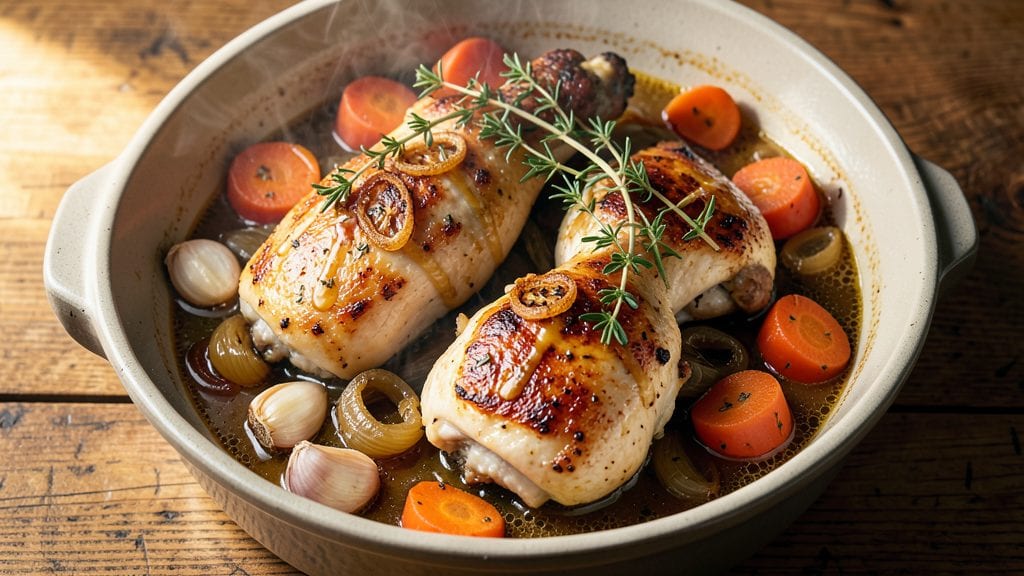
This beer-braised German chicken recipe delivers the perfect marriage of crispy golden skin and impossibly tender centers—just like my grandmother used to make back in Charleston. The secret lies in a slow braise with dark lager and aromatic herbs, transforming simple chicken thighs into a restaurant-worthy centerpiece.
I first perfected this technique while apprenticing under Master Chef Chen, where we learned how German Brathahn (braised chicken) balances richness with precision.
The magic happens in two stages: first, searing the chicken until deeply browned to lock in juices, then simmering it low and slow in a malty beer reduction until the meat practically melts. This method ensures every bite stays juicy while developing a caramelized crust that’s crispy without being dry.
The beer’s subtle bitterness cuts through the richness, creating balance that’s both traditional and approachable for modern kitchens.
By the time you serve it—plated with buttery spaetzle or tangy sauerkraut—you’ll have a dish that feels like a homecoming. The aroma alone will fill your kitchen with warmth, while the texture contrast between the crispy exterior and fall-apart centers makes it impossible to stop eating.
This is the kind of recipe that turns weeknight dinners into special occasions, no matter how busy life gets.
Pair it with roasted potatoes and a simple green salad for a complete German-inspired feast. The leftovers reheat beautifully, making it perfect for meal prep or entertaining. Let’s get started on a dish that’s equal parts comforting and impressive.
Ingredients for german chicken
Pantry staples meet German tradition—just 13 ingredients for restaurant-quality beer-braised chicken.
| Ingredient | Amount | Notes |
|---|---|---|
| Chicken Thighs, Bone-In 🍗 | 1 ½ lb | Skin-on, trimmed of excess fat |
| Dark Lager Beer 🍺 | 1 ½ cups | German-style, non-alcoholic works too |
| Yellow Onion 🧅 | 1 whole | Medium, sliced into half-moons |
| Carrots 🥕 | 2 medium | Peeled, cut into 1-inch chunks |
| Garlic Cloves 🧄 | 4 cloves | Peeled, smashed with side of knife |
| Fresh Thyme 🌿 | ¼ cup | Stems removed, leaves chopped |
| Fresh Rosemary 🌿 | ¼ cup | Needles finely chopped |
| Butter 🧈 | 3 tbsp | Unsalted, cold for searing |
| All-Purpose Flour 🌾 | ½ cup | For dredging chicken |
| Salt 🧂 | 1 ½ tsp | Diamond Crystal kosher |
| Black Pepper 🌶️ | 1 tsp | Freshly cracked |
| Bay Leaves 🌿 | 2 whole | Dried, for braising |
| Olive Oil 🫒 | 1 tbsp | For initial searing |
The chicken thighs are non-negotiable—bone-in, skin-on pieces give you that perfect crispy skin and juicy centers. Look for thighs with good marbling at the grocery store's butcher counter or Costco's bulk chicken section, where you can often find them pre-cut. If buying whole, trim excess fat but leave the skin intact—it's what creates that golden crust. For the beer, Ayinger or Paulaner are my go-tos, but any dark lager with malt-forward notes works. Non-alcoholic versions like Heineken 0.0 keep the same flavor profile without the hangover.
No dark lager? Substitute with beef broth plus 1 tbsp balsamic vinegar—it mimics the malty depth surprisingly well. Fresh thyme and rosemary are ideal, but dried works at one-third the amount if you're in a pinch. The carrots can be swapped for parsnips or celery root if you're feeling adventurous. For the flour, all-purpose is fine, but if you've got bread flour, it'll give you an even crispier crust. The bay leaves add depth—don't skip them, but remove them before serving. And trust me on the cold butter for searing—it browns beautifully without burning.
This dish tastes even better the next day, so make extra. Store leftovers in an airtight container in the fridge for up to 5 days, or freeze portions for 3 months. I like to portion it into individual containers before freezing so I can grab just what I need. The beer reduction thickens as it cools, so add a splash of water or broth when reheating. Perfect for meal prep—just pop it in the oven at 350°F for 20 minutes to crisp up the skin again.
Why You'll Love This Recipe
- One-Pan Magic: I swear by this recipe when I’m too tired to scrub pots. The chicken thighs, onions, and carrots all simmer together in the same pan—no fancy techniques, just a beer bath and 45 minutes of hands-off time. Honestly, the only cleanup is rinsing a single sheet pan.
- Beer-Braised Magic: That dark lager isn’t just for drinking—it’s the secret weapon. The malty depth cuts through the richness of the chicken while the garlic and onions caramelize into something dangerously addictive. Between us, the first bite makes you forget you’re eating a weeknight dinner.
- Leftovers That Shine: This dish begs to be made extra. The flavors only get better the next day—crispy edges on the chicken, tender carrots, and that beer sauce thickens into something restaurant-worthy. I pack it for lunches or freeze portions for lazy nights. (Yes, even on a Tuesday.)
- Budget-Friendly Feast: Bone-in thighs stretch further than breasts, and a six-pack of beer costs less than takeout. Carrots and onions bulk it up without breaking the bank. Here’s what sold me: a full meal for four that feels special but won’t drain my wallet. My wallet and my taste buds thank me.
Step-by-step instructions for beer-braised German chicken
Here's how to achieve that perfect balance of crispy skin and tender, juicy meat we're after.
Prepare the Chicken for Crispy Perfection
Pat the 1.5 lb chicken thighs, bone-in completely dry with paper towels—this is crucial for crispy skin. Trim any excess fat but leave a thin layer for flavor. In a shallow bowl, combine the 0.5 cup all-purpose flour, 1.5 tsp salt, and 1 tsp black pepper. Dredge each chicken thigh in the flour mixture, pressing gently to adhere evenly. Let them sit at room temperature for 15 minutes while you prep the rest.
I like to work with room-temperature chicken because it cooks more evenly. The flour creates a golden crust while absorbing some of the skin's moisture, which prevents the skin from steaming instead of crisping. Don't skip this step—it makes all the difference in texture.
Sear the Chicken for Maximum Flavor
Heat the 1 tbsp olive oil in a large Dutch oven over medium-high heat until shimmering. Add the 3 tbsp butter and let it foam for about 30 seconds. Place the flour-dredged chicken thighs skin-side down in the pot, working in batches if needed to avoid crowding. Press down gently on each thigh for 10 seconds to ensure good contact with the pan.
Cook undisturbed for 4-5 minutes until the skin is deep golden brown and crispy. You'll see the edges curl slightly—that's your signal to flip. Flip the chicken and cook the other side for 3-4 minutes until golden. Remove the chicken and set aside on a plate, skin-side up. The residual heat will keep it warm while you build the braising liquid.
Build the Aromatic Braising Base
In the same Dutch oven, add the sliced 1 whole yellow onion and 2 medium carrots cut into 1-inch chunks. Cook for 5 minutes until the onions soften and begin to caramelize. Add the 4 cloves garlic cloves and cook for 30 seconds until fragrant—don't let them brown or they'll turn bitter.
Stir in the 0.25 cup fresh thyme and 0.25 cup fresh rosemary, scraping up any browned bits from the bottom of the pot. This is where all the flavor concentrates. Pour in the 1.5 cups dark lager beer and bring to a gentle simmer. Add the 2 whole bay leaves and let the liquid reduce by half, about 5 minutes, until it's thickened slightly and smells deeply aromatic.
Braise to Juicy Perfection
Return the chicken thighs to the Dutch oven, skin-side up. The braising liquid should come about halfway up the thighs. Cover tightly with a lid and transfer to a preheated 325°F oven. Braise for 45-50 minutes until the chicken is fork-tender and the internal temperature reaches 165°F in the thickest part.
Here's the thing—don't peek or lift the lid during cooking. Every time you do, you release steam and extend the cooking time. The liquid should reduce further, creating a rich, flavorful sauce. If it gets too low, you can add a splash of water, but ideally, it should coat the bottom of the pan by the end.
Rest and Serve with Crispy Skin Intact
Remove the chicken from the oven and let it rest for 10 minutes before serving. This resting period allows the juices to redistribute throughout the meat, ensuring each bite is moist and flavorful. The skin should remain crispy if you've followed these steps carefully—no soggy chicken here!
Spoon the braising liquid over the chicken before serving. The sauce should be rich and slightly thickened from the reduction. Serve with the roasted vegetables from the braising liquid and a side of crusty bread to soak up every last drop. The contrast of crispy skin and tender, juicy meat is what makes this dish truly special.
Pro Tips For Making German Chicken
- SEAR THE THIGHS HARD: Don’t skimp on the initial sear—get your pan screaming hot and let those bone-in thighs develop a deep brown crust before adding anything else. I used to rush this, and the flavor just never stuck like it does when you take the extra 30 seconds per side. The beer’s maltiness pairs perfectly with that caramelized edge, so don’t let it slide.
- USE FULL-BODIED LAGER: Skip the light beers—this dish needs a dark lager with actual malt character (think Oktoberfest-style or a Belgian dubbel). The hop bitterness in lighter beers will fight with the onions and carrots, leaving you with a flat, watery sauce. I learned this after three batches with Pilsner, and the difference is night and day.
- DON’T CROWD THE PAN: If you’re browning the thighs in a single layer, resist the urge to stack them—even if it means two batches. Overcrowding steams the meat instead of searing, and you’ll end up with pale, soggy chicken. A quick second round in the same pan (after deglazing) works fine—just wipe it clean and crank the heat again.
- CARAMELIZE THE ONIONS LOW: The onions should turn golden, not burnt—this isn’t French onion soup. Simmer them on low heat for 15–20 minutes, stirring occasionally, until they’re soft and sweet. I used to walk away and come back to a blackened mess; now I set a timer and check every 5 minutes. Patience here means the beer sauce won’t taste like ash.
Regional styles of german chicken
Bavarian Brathuhn
This traditional German dish from Bavaria replaces beer with a rich white wine and vegetable broth braise, creating a lighter yet equally flavorful chicken.
The key difference is the addition of 1 cup of dry white wine (like Riesling) and 1 cup chicken broth instead of beer, plus 1 tbsp Dijon mustard for depth. Serve with semmelknödel (German bread dumplings) and red cabbage for a classic Bavarian spread. 🍷
Rheinland Sauerbraten Style
In the Rhineland region, chicken is often marinated overnight in a mix of red wine vinegar, juniper berries, and cloves before slow-cooking.
For this version, marinate the chicken thighs for 12-24 hours in 1 cup red wine vinegar, 1 cup water, 2 tbsp brown sugar, 1 tbsp juniper berries, 4 cloves, and 1 cinnamon stick.
Braise at 300°F for 2-3 hours until tender, then serve with spätzle and a sweet-sour red cabbage slaw. 🌿
Berliner Schnitzel Twist
While not a braised dish, Berlin-style chicken schnitzel offers a crispy alternative. Pound bone-in, skin-on chicken breasts to ¼-inch thickness, coat in flour, then egg wash, and finally breadcrumbs mixed with 1 tsp paprika.
Pan-fry in butter and oil until golden and crispy. Serve with lemon wedges and cucumber salad for a lighter, crunchier German chicken experience. 🍽️
Saxon Sauerbraten Chicken
In Saxony, chicken is often braised with sauerkraut and apples for a tangy-sweet flavor. Sear the chicken as directed, then braise with 1 cup sauerkraut, 1 chopped apple, 1 tbsp caraway seeds, and ½ cup apple cider instead of beer.
The result is a dish with sweet-tart depth that pairs perfectly with potato dumplings. 🍏
Modern German Fusion
For a contemporary twist, try a smoked paprika and beer version. Add 1 tbsp smoked paprika to the flour dredge and ½ cup chicken stock to the beer braise.
Top with crumbled feta and fresh dill before serving. This fusion keeps the German roots while adding Mediterranean flair—great for a weeknight dinner that feels special. 💫
Nutrition facts
Frequently asked questions
What's the secret to getting perfectly crispy skin on German-style braised chicken?
Pat the chicken thighs completely dry before dredging in flour—moisture is the enemy of crispiness. Sear them skin-side down over medium-high heat for 4-5 minutes without moving until deeply golden. The butter in the pan helps create that caramelized crust while preventing burning.
Can I use chicken breasts instead of thighs for this recipe?
Not ideal—they'll dry out during the long braising time. If you must use breasts, opt for bone-in, skin-on pieces and reduce braising time to 25-30 minutes at 325°F. For best results, stick with thighs—they stay juicy while developing that crispy skin.
How do I make this dish ahead of time for a dinner party?
Prepare everything up to the searing step, then refrigerate the dredged chicken overnight. The next day, sear and braise as directed. The chicken reheats beautifully—simmer in the oven at 350°F for 20 minutes with a splash of water to revive the sauce. The flavors actually deepen overnight!
What's the best beer to use if I can't find German dark lager?
Any dark beer with malt notes works—try stout, porter, or even non-alcoholic dark beer. For non-beer options, substitute with beef broth plus 1 tbsp balsamic vinegar. The key is the malty depth, not the alcohol content.
Why did my chicken turn out dry instead of juicy?
Most likely, you skipped the 10-minute rest before serving or overcooked it. Use a meat thermometer—chicken should reach 165°F in the thickest part. Also, don't lift the lid during braising (releases steam) and avoid cutting into the chicken until ready to serve.